
Clean Water Act 50th Year Celebration
Clean Water Act Anniversary at NoDa Brewery
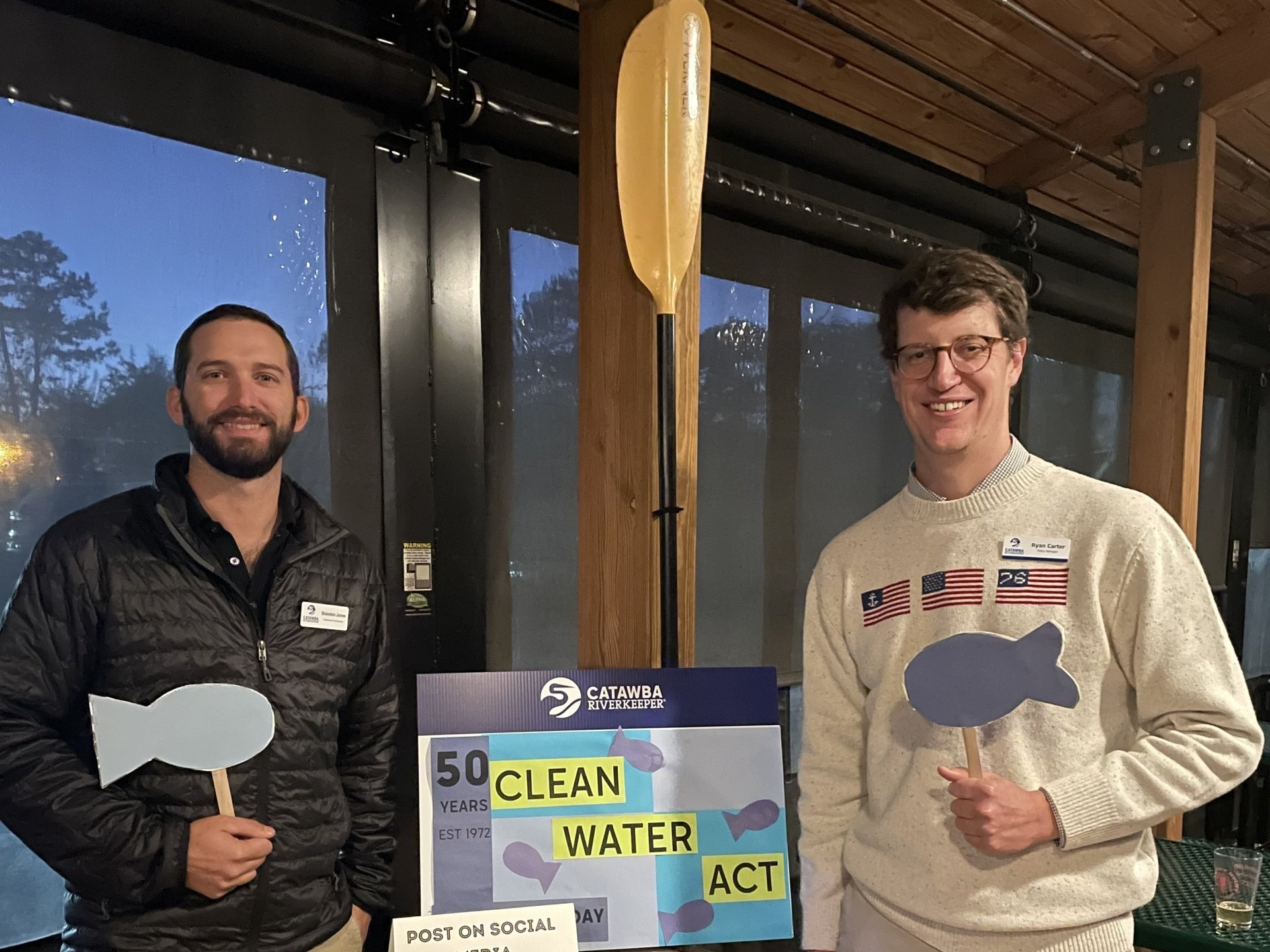
Clean Water Act Celebration
There was a time where rivers would catch on fire. There was a time when rivers would receive a range of dyes from textile mills dumping into rivers. There was a time when anyone could dump anything into our waterways without punishment. This wasn’t last night at Biltmore, it was all across America, before 1972.
The Clean Water Act passed Congress on October 4th, 1972. It passed the House by a margin of 366-11 (97%) and it passed the Senate unanimously (100%). On October 17th 1972, President Richard Nixon vetoed the bill. That same day, within a matter of hours, both chambers of Congress overrode the veto. Not only does this demonstrate how critically important the Clean Water Act is, but how conservation policy truly can be a bipartisan effort. 94% of House Republicans and 98% of House Democrats supported the measure. In the Senate, there were 31 Republicans and 41 Democrats who supported the bill.
This landmark legislation gave us a baseline to govern the way society interacts with our water.
Some of the regulations included:
- the right forindividuals and civic groups (like Catawba Riverkeeper) the right to hold polluters accountable
- the role the federal government has in protecting our waters.
- the baseline to define water quality
- the expectation that in the event of a calamitous disaster, we have the procedures for remediating the problem to restore the waters to their previous quality.
These are but a handful of examples of how the Clean Water Act forever changed our relationships with water.
As transformational as the Clean Water Act has been, there is still a long way to go. Corporations are still polluting the waters. The South Fork River still runs red. Our creeks are increasingly impaired. Pollution from rural and urban communities seeps into our streams and rivers. Stormwater controls are not keeping up with the rapid rate of development. The world around us is changing and our waters are not exempt. We need the laws that govern our lands and waters to be continuously updated to ensure they keep up with the changing world. Catawba Riverkeeper will continue to fight for these changes to ensure that future generations have clean waters for years to come.
Check out the videos below to hear a little of what Riverkeeper Brandon Jones and Policy Manager Ryan Carter shared with supporters on the night of the celebration. Brandon gave perspective about the history of act and Ryan spoke about a water challenge we are facing throughout the basin, stormwater control.
Link in Bio for a petition about Stormwater Runoff Mitigation here.
Riverkeeper Brandon Jones discussing the origins of the Clean Water Act
Policy Manager Ryan Jones talking about Stormwater Runoff