
Canoe Creek Restoration Project Press Release
Foothills Conservancy of NC and Catawba Riverkeeper Complete First Phase of Landmark Canoe Creek Restoration at Oak Hill Community Park and Forest
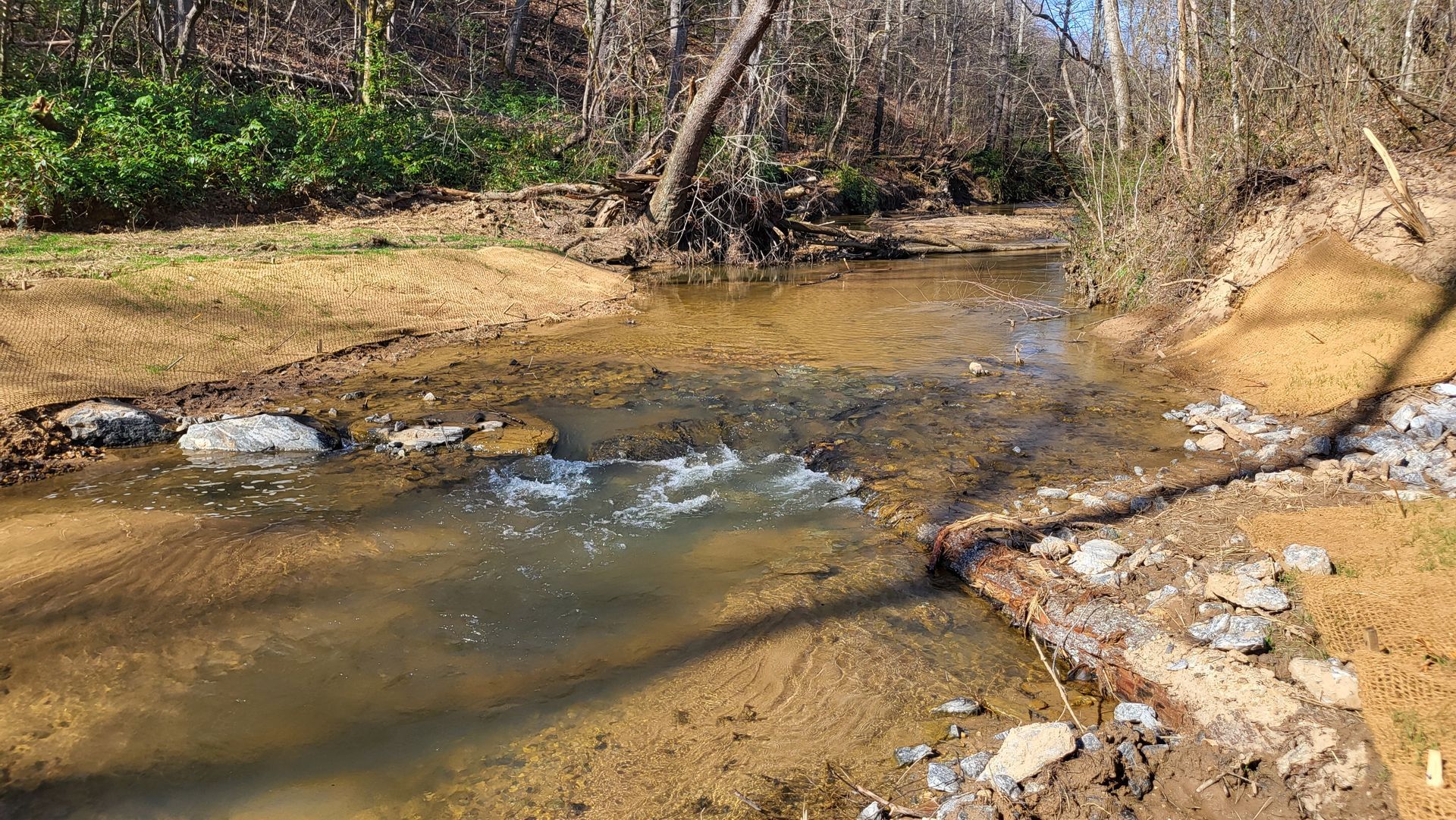
MORGANTON, NC – Foothills Conservancy of North Carolina (FCNC) has completed the first phase of the Canoe Creek Restoration Project at Oak Hill Community Park and Forest, marking a major milestone in a significant stream restoration effort in Burke County.
The project restored a section of Canoe Creek near NC-126 that was identified by Catawba Riverkeeper as a high-priority water quality improvement project in the Lake Rhodhiss watershed. This successful project lays the foundation for future restoration efforts that will benefit wildlife, improve water quality, and aims to reduce downstream flooding.
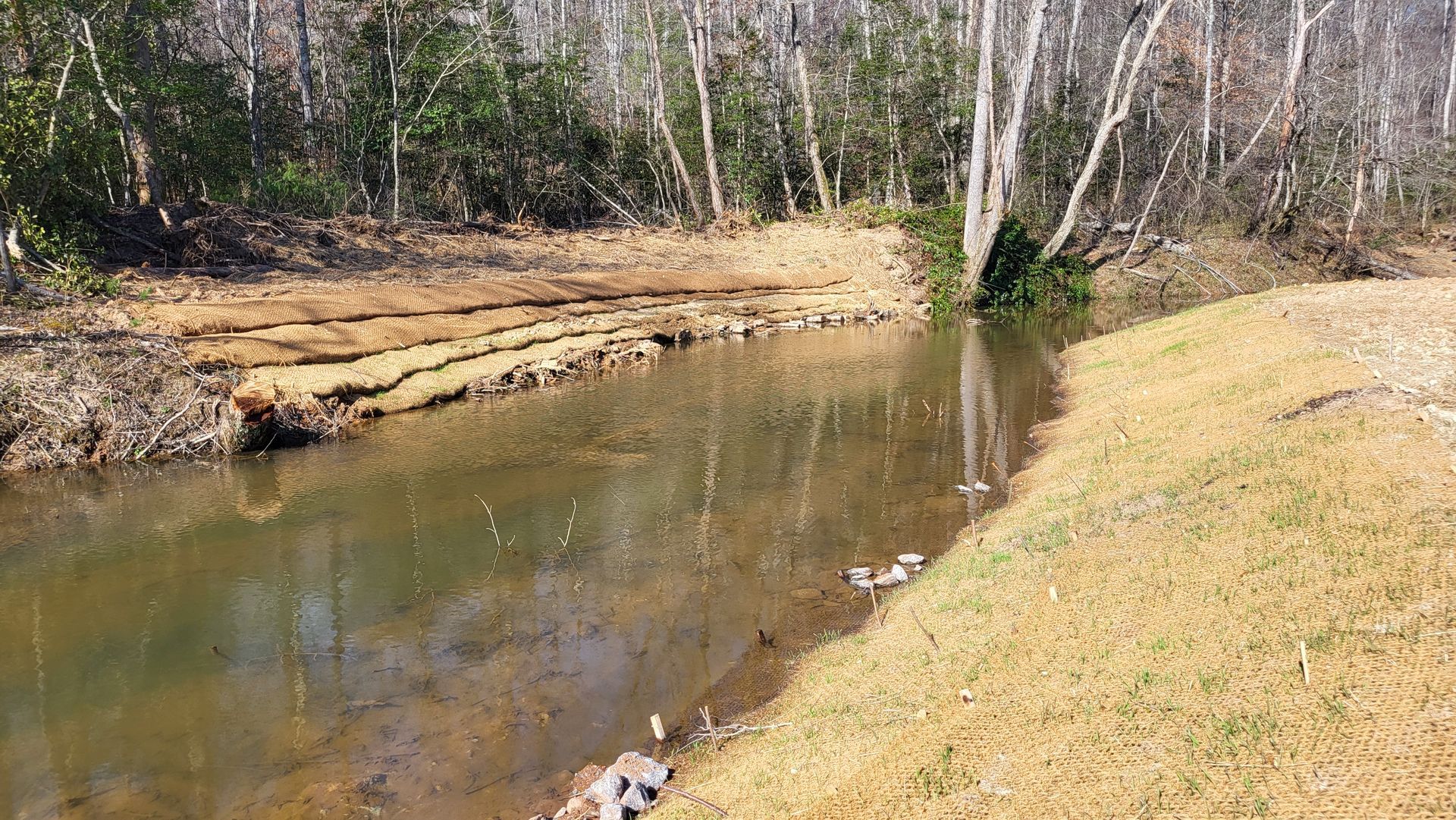
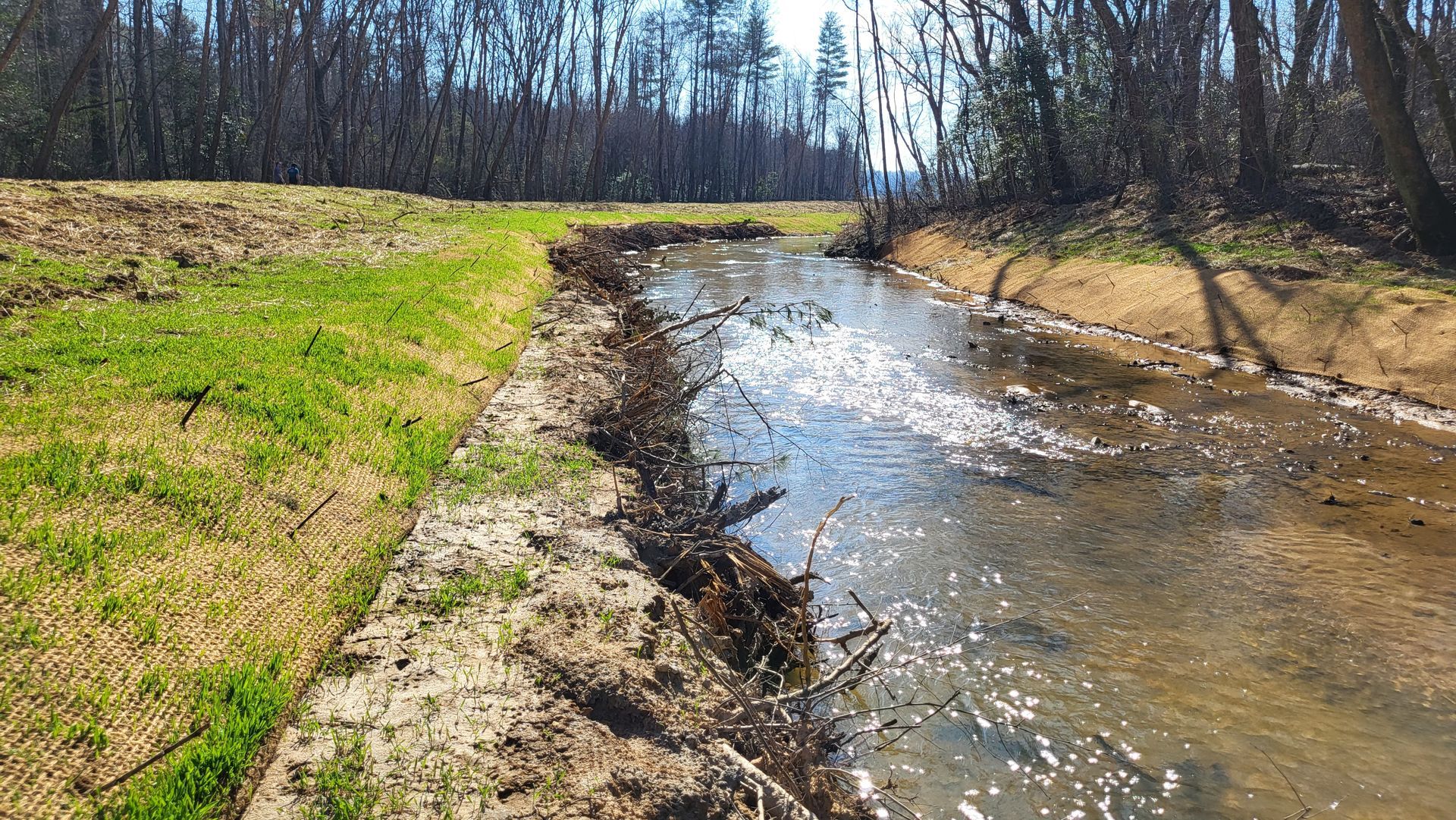
The project restored approximately 2,200 linear feet of Canoe Creek using natural channel design and streambank terracing techniques that reconnect the stream to its historic floodplain. By slowing the flow of water and allowing it to spread naturally during heavy rain events, the restoration will reduce erosion and decrease sediment entering downstream waterways, enhancing the creek's resilience during future storms.
The restoration will also help the landscape better absorb and slow floodwaters during major storm events. As Western North Carolina continues to experience more intense rainfall and flooding, restoring natural floodplain function is an important way to reduce erosion, limit downstream sedimentation, and improve the resilience of both the creek and the surrounding landscape.
"The restoration of Canoe Creek offers a tangible example of how protecting land can lead to restoring the natural systems that flow within it," said FCNC Conservation and GIS Specialist Michael Gaffney. “It’s not enough for land trusts to simply preserve land; we must also steward and improve those natural resources through restoration and habitat management.”
Other benefits of reconnecting Canoe Creek to its floodplain and improving the surrounding riparian area, include improved habitat for native fish, mussels, and aquatic macroinvertebrates, which are important food sources for various native wildlife like great blue herons and otters.
"This project is about much more than one stream," said Catawba Riverkeeper Northern Basin Director Grant Buckner. "Not only does it benefit Canoe Creek, but it also benefits everyone downstream due to reduced streambank erosion, which improves water quality. Also, since it is at a local park, we are excited to show the local community and other groups the positive impacts of stream restoration.”
This first phase of restoration is part of a larger vision for Canoe Creek, which flows through Oak Hill Community Park and Forest before joining the Catawba River near Freedom High School. A 61-acre addition to the park in 2025 by FCNC protects more than 5,000 linear feet of Canoe Creek and its tributaries.
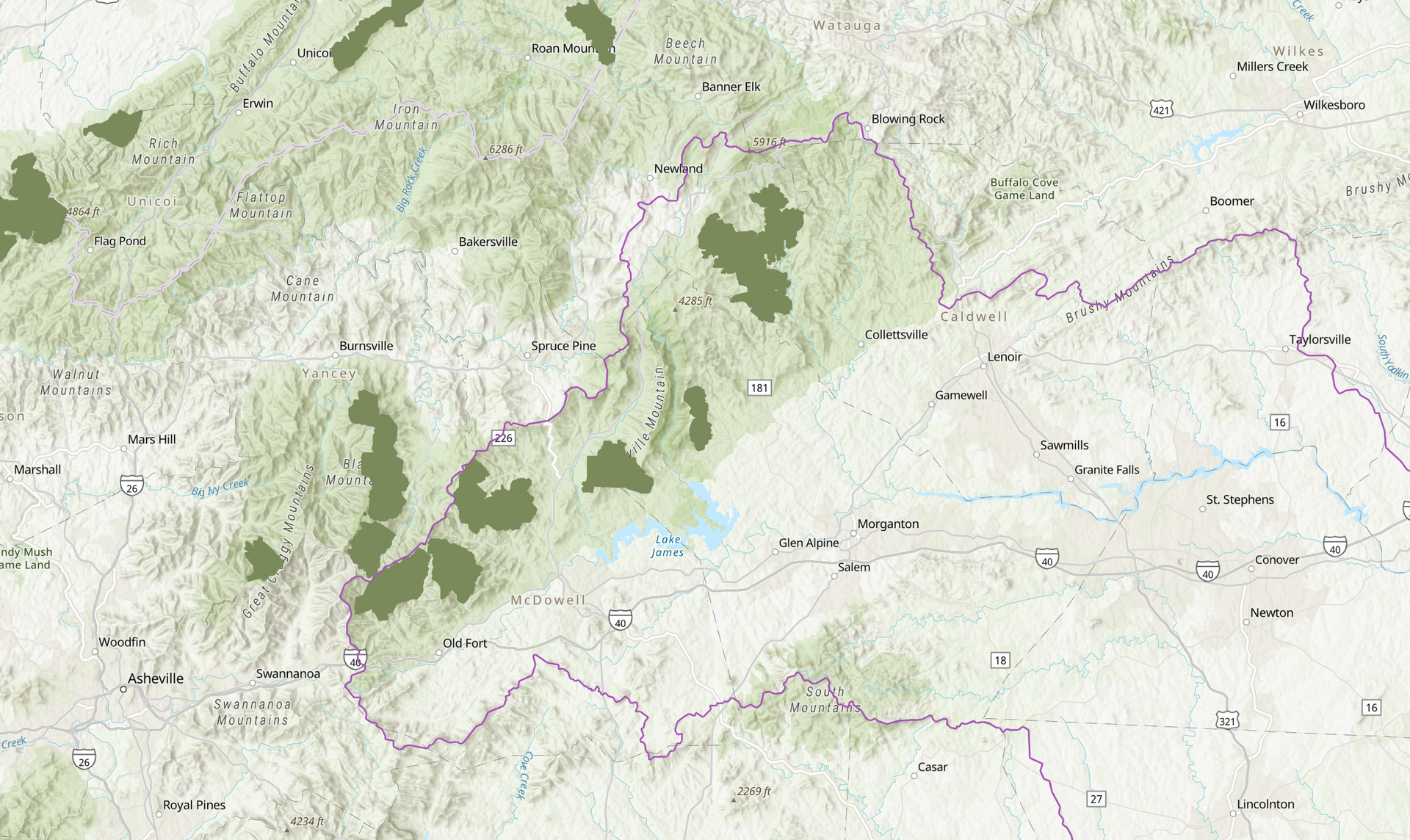
Canoe Creek emerged as a high-priority restoration opportunity during a watershed planning effort led by Catawba Riverkeeper and funded by the North Carolina Land and Water Fund. Previous studies identified the creek as one of the largest contributors of sediment entering the Lake Rhodhiss watershed, a drinking water source for several Western North Carolina communities.
"One of the many important ways we can improve water quality and wildlife habitat here in Morganton and for the millions of people who rely on the Catawba-Wateree River Basin is through restoring degraded streams like Canoe Creek,” said Buckner.
Wildlands Engineering led the project’s design and permitting and provided construction oversight, with Baker Grading & Landscaping completing the on-the-ground construction. The restoration incorporates a variety of in-stream structures designed to mimic the functions of a healthy, naturally flowing creek. These elements include J-hook vanes, constructed from logs and stone, which redirect water toward the center of the channel and reduce pressure on eroding streambanks; brush toes that use woody material gathered on site to protect banks while creating sheltered aquatic habitat; and constructed rock riffles that slow and aerate flowing water while adding habitat complexity. Together, these features help stabilize the streambed and allow Canoe Creek to function more naturally over time.
While phase one is now complete, FCNC is actively raising funds for phase two, which will restore an additional 2,550 linear feet of Canoe Creek directly downstream.
"Oak Hill Community Park and Forest is a great demonstration of the various conservation tools FCNC has in our kit," Gaffney said. "Land acquisition, regenerative agriculture, environmental education, forest and wildlife stewardship, public recreation, and now stream restoration are all part of this community landscape, and our partnership with the Catawba Riverkeeper, Wildlands Engineering and Baker Grading, is representative of the collaborative nature of conservation."
Phase one of the Canoe Creek Restoration Project was made possible thanks to the support of Burke County, which helped administer a North Carolina Department of Environmental Quality Division of Water Resources’ Water Resources Development Grant Program grant. Additional funding was provided by the North Carolina Land and Water Fund, Duke Energy Catawba-Wateree Habitat Enhancement Program, and the Rostan Family Foundation.
###