
Commenting On The Roadless Rule
Now Is the Time to Speak Up for Our Forests & Rivers
The Roadless Rule, which was enacted in 2001 with ample bipartisan support, currently protects 58.5 million acres of undeveloped National Forest lands from road construction and industrial logging. However, an effort is being made to rescind the Roadless Rule and open these protected lands up to large-scale logging operations and road construction.
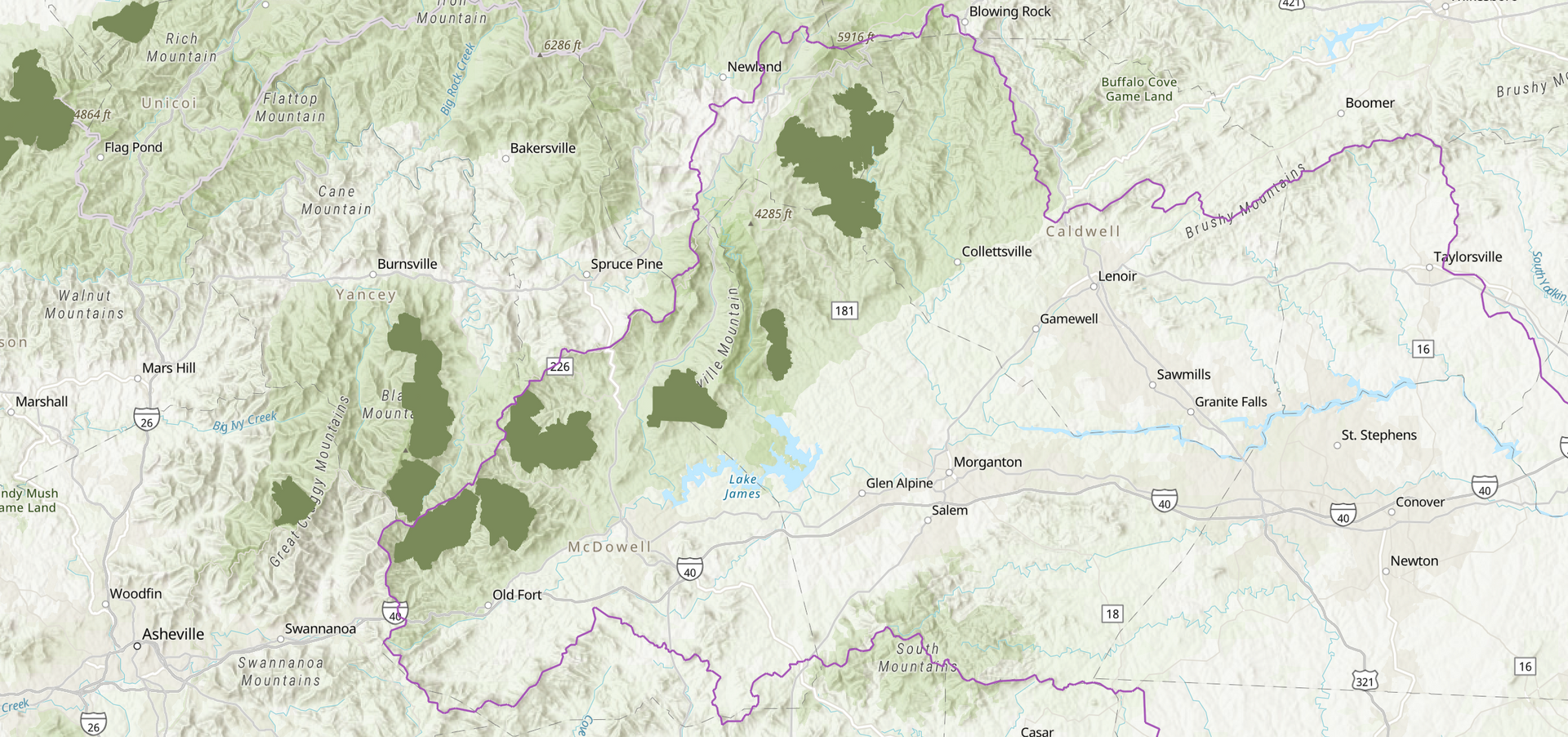
At Catawba Riverkeeper, we know that undeveloped tracts of land are vital for healthy watersheds. Excessive logging and road construction accelerate erosion, introduce invasive species, and cause fragmentation of habitat that restricts the movement and reproduction of native aquatic species in our creeks and rivers. As development continues rapidly beyond these protected spaces, it is critical to conserve pockets of undeveloped land to safeguard the water resources we depend on for survival. If the Roadless Rule is rescinded, 50,072 acres of the Catawba-Wateree River Basin will be opened up for logging and road construction, including:
- Jarrett Creek (7,485 acres)
- Mackey Mountain (5,934 acres)
- Woods Mountain (9,601 acres)
- Dobson Knob (6,111 acres)
- Linville Gorge Addition (2,809 acres)
- Harper Creek (7,325 acres)
- Wilson Creek (4,863 acres)
- Lost Cove (5,944 acres)
How do roadless areas protect watersheds?
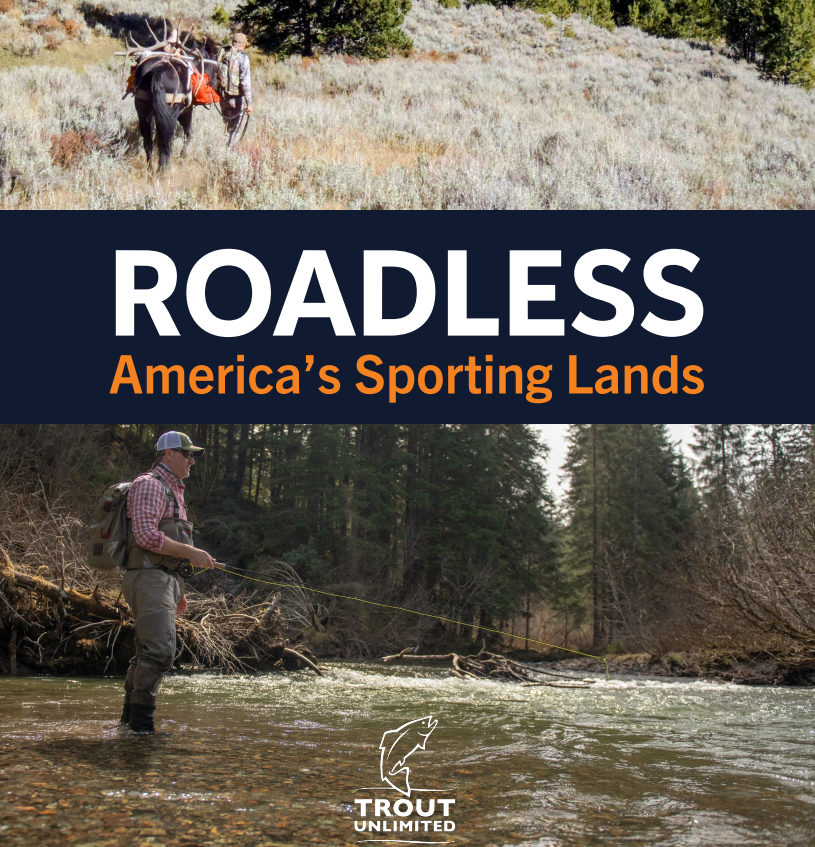
To better understand the importance of these undeveloped pockets of land and the direct link they provide to improving the health of our waterways, we recommend digging into reports from folks who are seeing the positive impacts of roadless areas first-hand. Trout Unlimited has published a report in response to the precarious situation we find the Roadless Rule in that highlights the many benefits roadless areas have for watersheds, wildlife habitats, enhancing forest management, hunting, and fishing.
"Research conducted by the U.S. Forest Service shows that roadless areas are nearly twice as likely to have properly functioning watersheds compared to roaded areas. Roads introduce sediment and invasive species, alter hydrologic flows, fragment habitat, and create barriers to fish migration." -Roadless: America's Sporting Lands, Trout Unlimited
Click the button below to read the full report.
To learn more about how the Roadless Rule directly impacts rivers throughout the country, you can visit the American Rivers website.
How to show your support of the Roadless Rule
So, what can we do?
Now is the time to act. The comment period is open until Monday, September 21 at 11:59 PM. With just a few minutes of your time, you can write a comment online or mail in a comment sharing why you value the Roadless Rule and everything it protects. Collectively, our voices can make a real impact to preserve our river and the land surrounding it.
Mail in or submit a virtual comment by 11:59 PM on September 21st.
Handwritten comments and postcards must be mailed to the address below:
Director, Ecosystem Management Coordination
201 14th Street SW, Mailstop 1108
Washington, DC 20250-1124
Or, submit a comment online by clicking the button below.
Not sure what to say?
You can adapt our sample message below.
As a passionate advocate for our nation's public lands and waterways, I am writing to share my strong opposition to rescinding or altering the Roadless Conservation Area Rule. The protections currently provided for these 58.5 million acres of land across the United States not only conserve critical habitat for native species, but they also ensure that Americans, like myself, have undeveloped natural spaces to enjoy hiking, hunting, fishing, and so much more. One of my favorite places to visit is the ___________ [insert a specific roadless area or river in a roadless area here] near my home in ________.
I am deeply concerned with the idea of rescinding the Roadless Rule, which is extremely important to maintaining the health of our local drinking water resources. The Roadless Rule directly protects over 80,000 miles of rivers, some of which are right here in my back yard in the Catawba-Wateree River Basin. Our local water resources are already heavily impacted by stormwater runoff and erosion caused by rampant development throughout the region, so it is critical that we conserve the safe haven spaces currently protected by the Roadless Rule.
I strongly support maintaining the Roadless Rule as it is. Watershed protection is vital for the health and wellbeing of our communities now and for generations to come.
Sincerely,
[Your Name]