

All About Alligator Weed
Native to South America, alligator weed has become a widespread invasive species along the East Coast, rapidly spreading through waterways, wetlands, and shorelines. Its aggressive growth disrupts ecosystems by outcompeting native vegetation, reducing habitat quality for wildlife, and creating challenges for recreation, water management, and local communities.
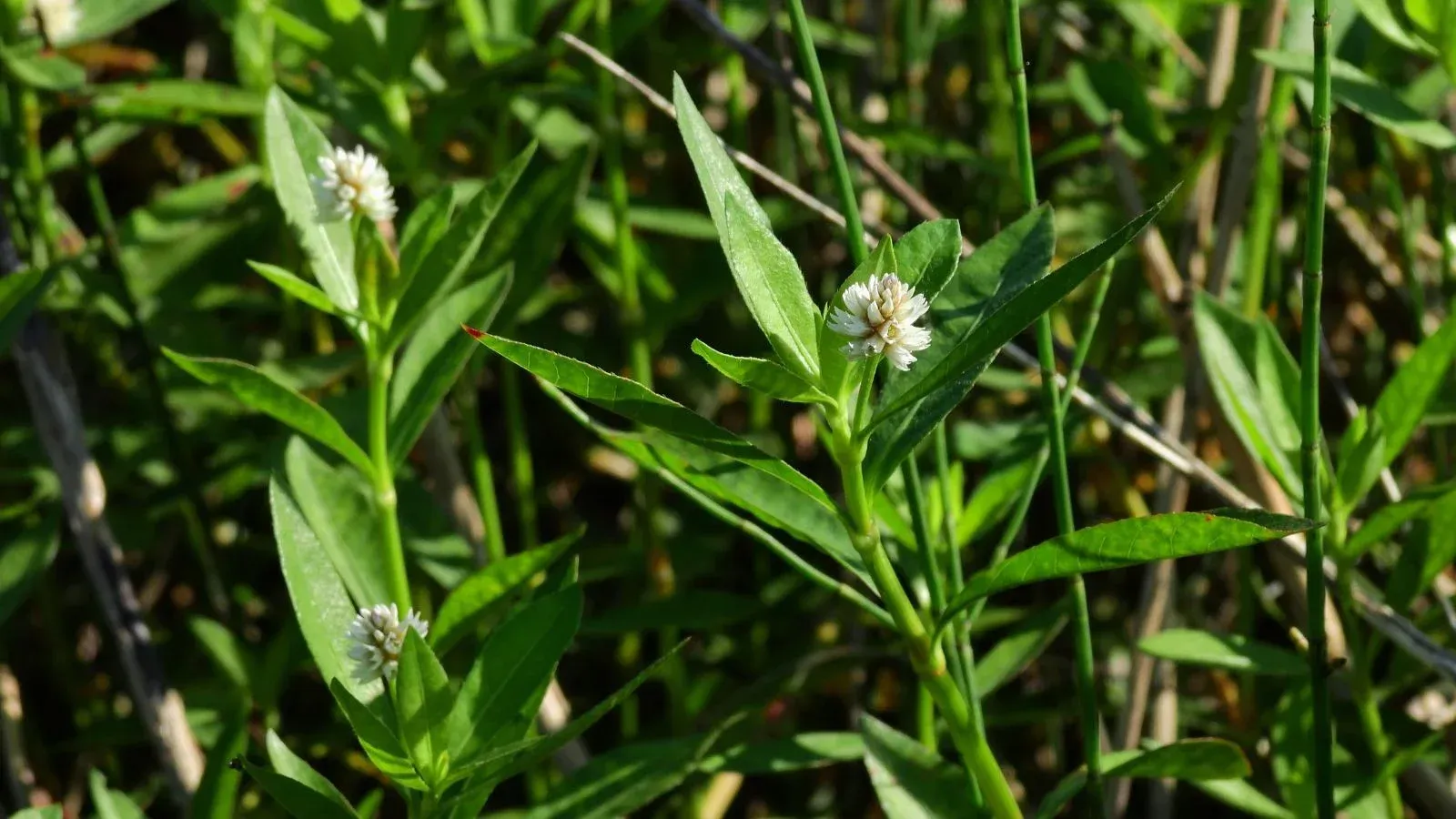
Alternanthera philoxeroides, or alligator weed, is an invasive plant that is native to South America. Researchers generally agree that the species arrived in the United States via ship ballast water containing contaminated plant material. Since its introduction, the plant has spread rapidly across the east coast of the United States, affecting both natural ecosystems and human activities.
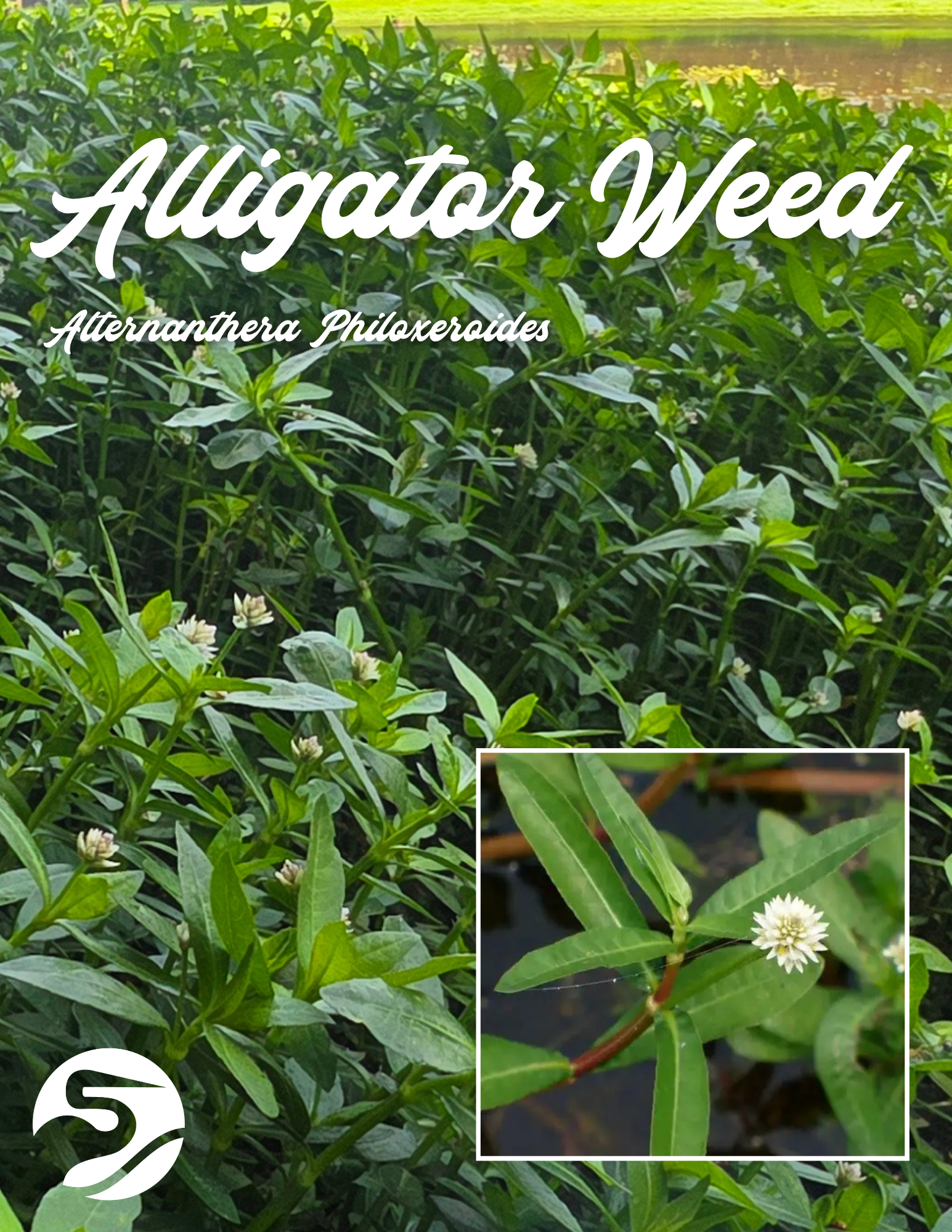
Alligator weed is characterized by several distinct features. The plant has hollow stems that can come in pale green, pink, or light red. These stems often form dense and tangled mats, which can spread more than 30 feet wide along shorelines and waterways. These dense mats create significant ecological and economic problems. By covering the water’s surface, alligator weed blocks sunlight from reaching native aquatic plants, reducing their growth and disrupting aquatic ecosystems. The mats also decrease water flow and lower oxygen levels in the water and degrade habitats for fish and other wildlife. In addition, heavy infestations can interfere with boating, fishing, swimming, and irrigation systems, making waterways less accessible and more costly to manage.
What makes alligator weed invasive is its aggressive growth, adaptability, and resilience. The combination of these three factors allows the weed to spread rapidly and outcompete native plant species. Alligator weed can regenerate from tiny stem fragments, with just one node capable of producing an entirely new plant. Because of this, removal methods such as cutting and harvesting may worsen infestations when fragments are left behind in water. Alligator weed can thrive in both wetlands and drylands, rooting in soft sediments or soil.
Once established, alligator weed is a highly resilient plant that can withstand many conventional control methods. Without an effective form of traditional plant management available, Catawba Riverkeeper is working on introducing a biological control to cull the species. Biological control for alligator weed primarily relies on the alligator weed flea beetle, which is a bug that naturally feeds on alligator weed. Originally found in South America, this small beetle grows about 5mm in length and is easily recognized by its dark body and yellow markings.
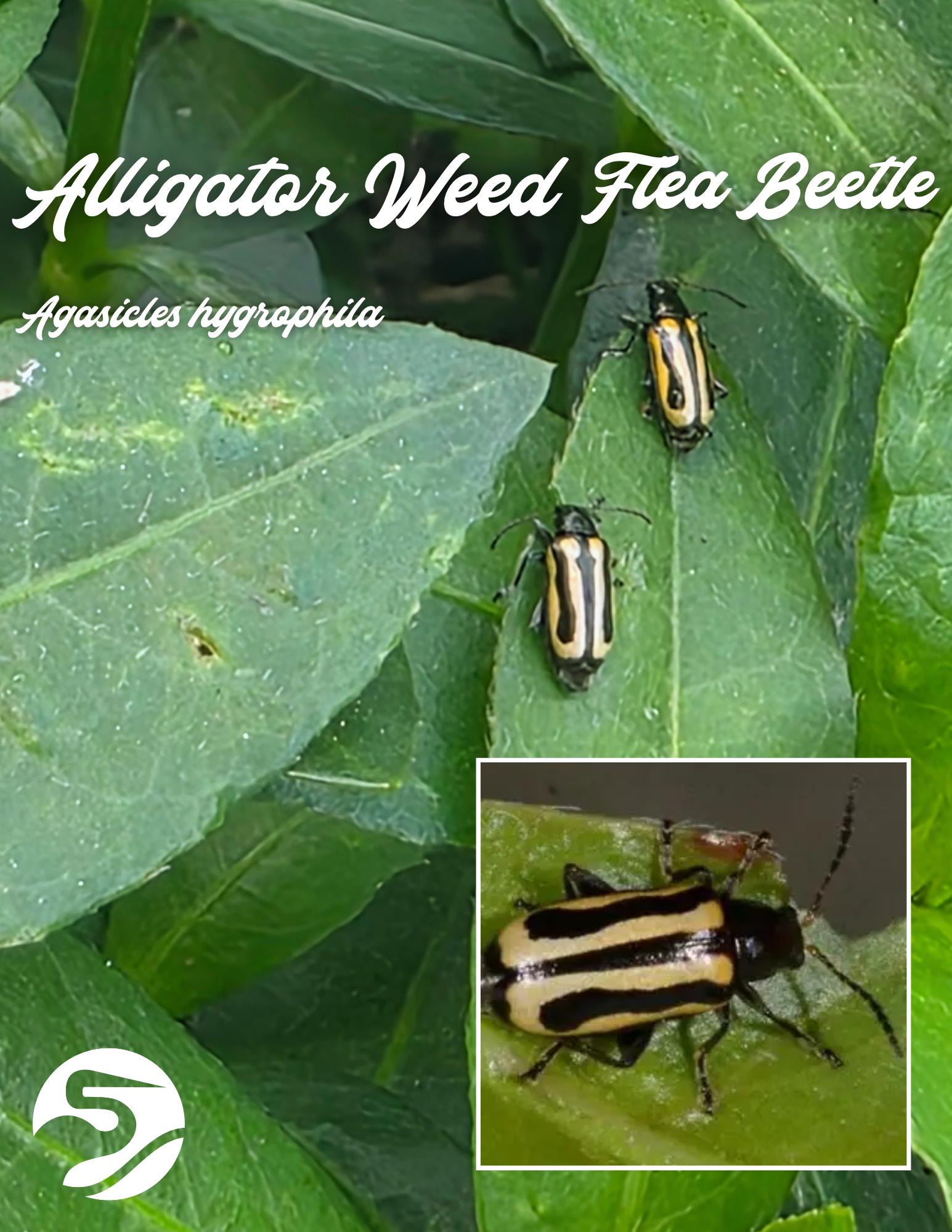
During their six-week lifespan, female alligator weed flea beetles can produce around 1,000 eggs, which are laid in clusters along the undersides of alligator weed leaves. After hatching, young larvae feed together on foliage before dispersing and feeding independently. Both the larval and adult stages damage the plant by consuming its leaves, often stripping dense mats down to exposed stems. When ready to pupate, larvae create chambers within hollow stems located above the water's surface and seal them using chewed plant material.
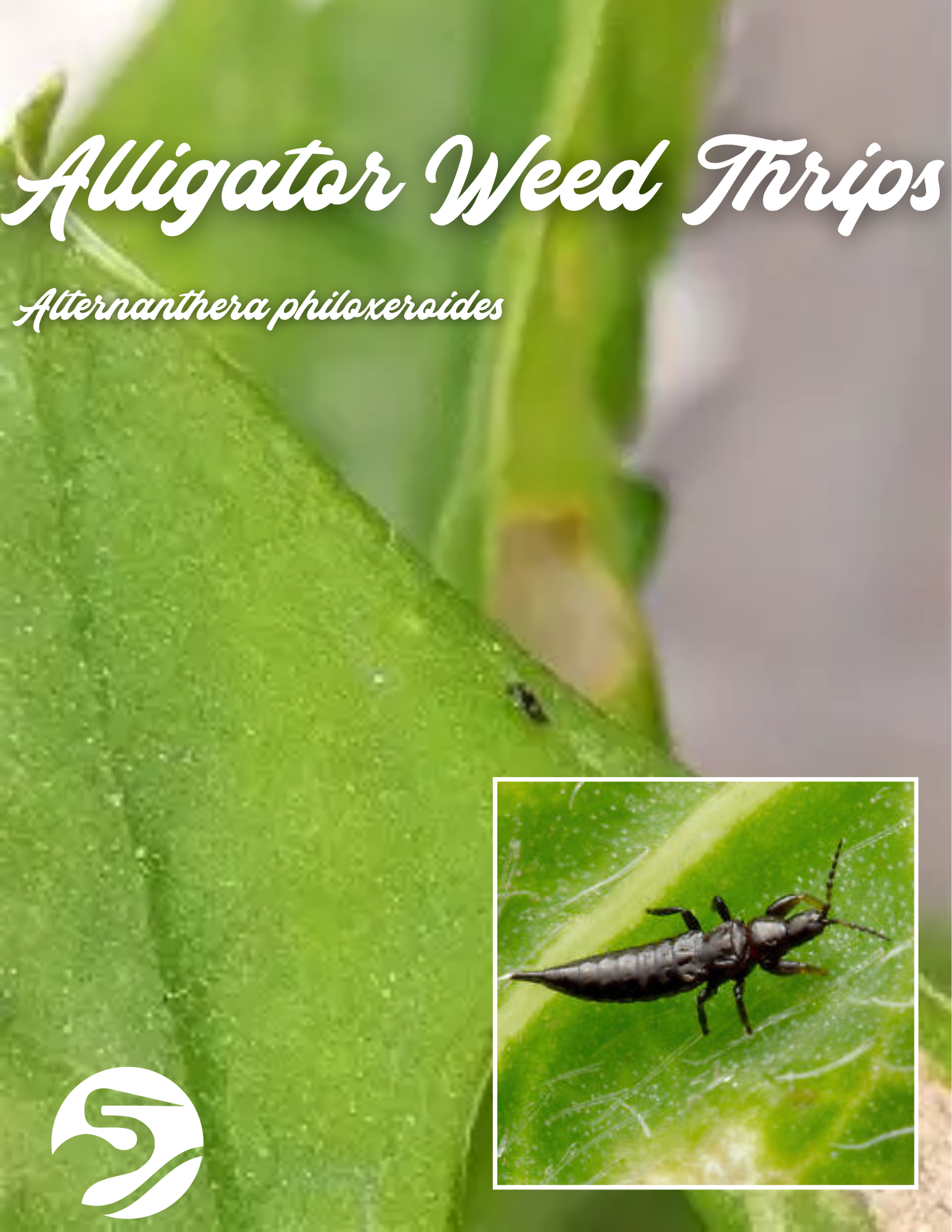
While the alligator flea beetle has proven to be an effective biological control agent, its populations are often limited by cold winter temperatures. The beetle struggles to survive prolonged periods of freezing weather, which can reduce its numbers and limit its effectiveness in cooler regions. To address this challenge, we have additionally introduced the alligator weed thrips, a bug that is more cold-tolerant. The alligator weed thrips are a small, shiny black insect species native to South America. While thrips are more tolerant to the cold, they typically work more slowly than flea beetles, feeding primarily on new growth and gradually weakening the plant over time. Because the flea beetles and thrips perform best under different environmental conditions, their combined use provides more consistent and long-lasting suppression of alligator weed populations.
In collaboration with Duke Energy and the Army Corps of Engineers, we have introduced these biological control agents in several sites in the Catawba-Wateree River Basin to help control the spread of the weed. Stay tuned for more updates on our work to use biological controls to minimize the presence of invasive species and improve the health of our watershed.