Clean Water Act 50th Year Celebration

Hank Talmadge • November 8, 2022

Clean Water Act Anniversary at NoDa Brewery
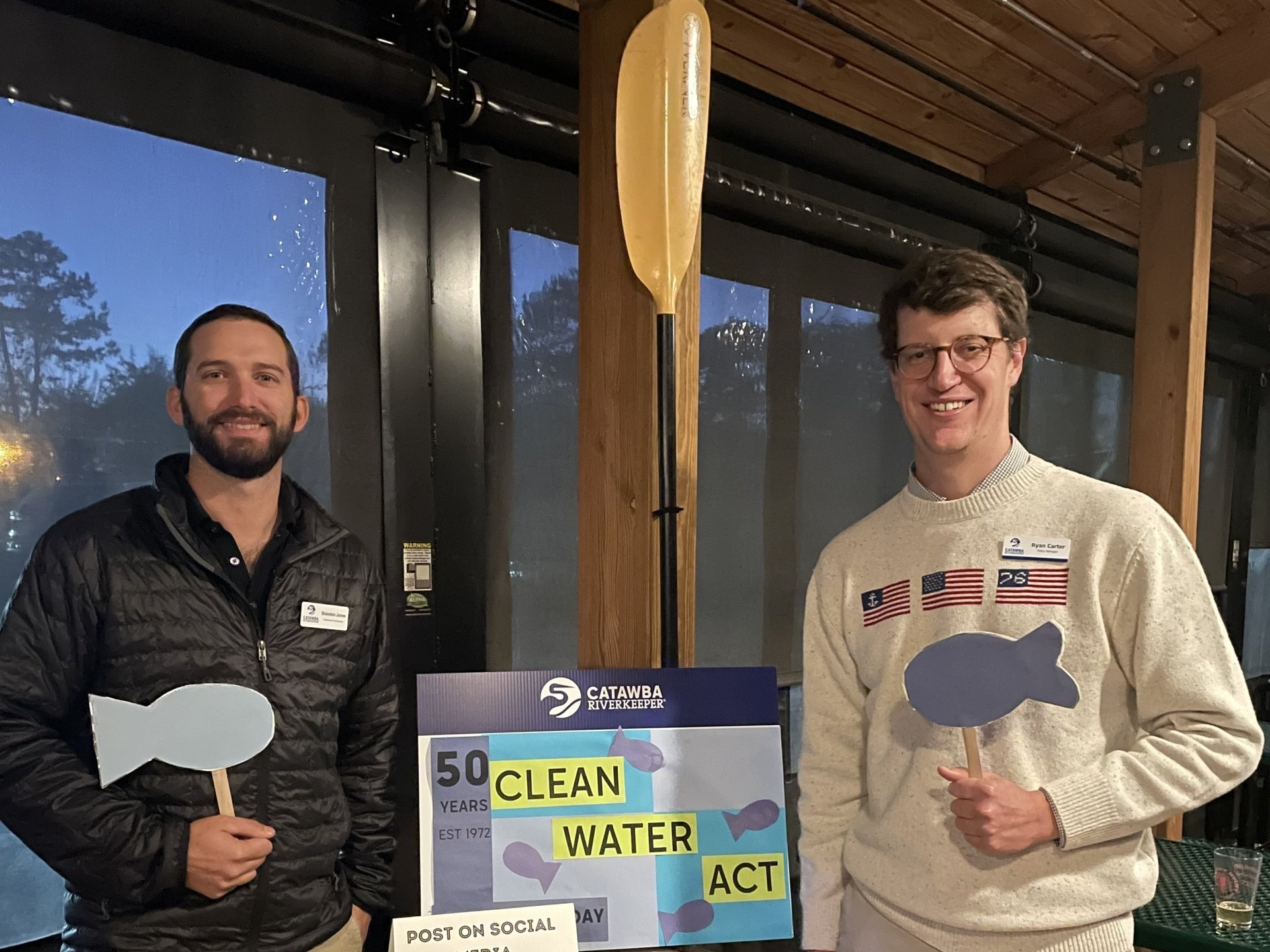
Clean Water Act Celebration


There was a time where rivers would catch on fire. There was a time when rivers would receive  a range of dyes from textile mills dumping into rivers. There was a time when anyone could dump anything into our waterways without punishment. This wasn’t last night at Biltmore, it was all across America, before 1972. 

The Clean Water Act passed Congress on October 4th, 1972. It passed the House by a margin of 366-11 (97%) and it passed the Senate unanimously (100%). On October 17th 1972, President Richard Nixon vetoed the bill. That same day, within a matter of hours, both chambers of Congress overrode the veto. Not only does this demonstrate how critically important the Clean Water Act is, but how conservation policy truly can be a bipartisan effort. 94% of House Republicans and 98% of House Democrats supported the measure. In the Senate, there were 31 Republicans and 41 Democrats who supported the bill. 

This landmark legislation gave us a baseline to govern the way society interacts with our water.

Some of the regulations included:

- the right forindividuals and civic groups (like Catawba Riverkeeper) the right to hold polluters accountable

- the role the federal government has in protecting our waters.

- the baseline to define water quality

- the expectation that in the event of a calamitous disaster, we have the procedures for remediating the problem to restore the waters to their previous quality.


These are but a handful of examples of how the Clean Water Act forever changed our relationships with water. 

As transformational as the Clean Water Act has been, there is still a long way to go. Corporations are still polluting the waters. The South Fork River still runs red. Our creeks are increasingly impaired. Pollution from rural and urban communities seeps into our streams and rivers. Stormwater controls are not keeping up with the rapid rate of development. The world around us is changing and our waters are not exempt. We need the laws that govern our lands and waters to be continuously updated to ensure they keep up with the changing world. Catawba Riverkeeper will continue to fight for these changes to ensure that future generations have clean waters for years to come. 


Check out the videos below to hear a little of what Riverkeeper Brandon Jones and Policy Manager Ryan Carter shared with supporters on the night of the celebration. Brandon gave perspective about the history of act and Ryan spoke about a water challenge we are facing throughout the basin, stormwater control.


Link in Bio for a petition about Stormwater Runoff Mitigation here.


Riverkeeper Brandon Jones discussing the origins of the Clean Water Act

Policy Manager Ryan Jones talking about Stormwater Runoff
February 5, 2026
We're excited to announce that we are relocating Catawba Riverkeeper's headquarters to Confluence South Fork, our community center taproom in downtown Cramerton , NC . Th is move follows four years of operating out of The River Room in McAdenville and reflects an organizational transition focused on aligning our facilities with Catawba Riverkeeper's mission and long-term sustainability . “Our two taprooms have served as creative and welcoming spaces for engaging the community and inviting more people into the work of protecting our local waterways,” said Wendy Cauthen, Retail Manager. “We are grateful for all the opportunities we’ve had to connect with people over a beer brewed with water from the Catawba-Wateree River basin while enjoying a view of McAdenville Lake at The River Room. While we’ll miss that space, we’re excited to be just a few minutes down the road at Confluence, where we can more fully integrate our mission into a single, dynamic community hub.” Confluence, known affectionately as a “taproom with a purpose,” reminds all visitors who step through the door that “good beer needs good water.” Visitors are greeted by the phrase prominently displayed next to a striking mural by local artist Heidi Nisbett, which illustrates both the beauty and geography of the Catawba–Wateree River basin. “With staff now working on-site at Confluence, we can more intentionally connect the art, music, and recreation people already love with mission-driven programming that highlights education and conversation surrounding water conservation,” said Executive Director Dr. Mo Drinkard. “Our mission has always been to preserve, protect, and restore the waters that millions of Carolinians depend on every day. This move allows us to streamline our efforts, deepen public engagement, and continue serving as a trusted, science-based voice for the river.” We are deeply grateful for our time at The River Room and for the support of the Town of McAdenville, Pharr Corporation, and the surrounding community. Now headquartered just minutes away in Cramerton, we look forward to continuing these and other partnerships across the entire 5,610-square-mile Catawba–Wateree River basin. We invite longtime supporters, Confluence regulars, and new visitors alike to stop by and say hello to staff following our February move.
January 13, 2026
Reflecting on a year of growth and impact.
December 17, 2025
Catawba Riverkeeper is pleased to announce that Dr. Mo Drinkard has been hired as their new Executive Director. A standout among over 100 applicants, Mo was offered the position by the Catawba Riverkeeper Board of Directors search committee on Thursday, November 20th, and she assumed her role as leader of the organization on Monday, December 1st, 2025. Catawba Riverkeeper Brandon Jones, who participated on the search committee, shared that “Mo’s education, experience, and passion are directly aligned with the organization’s mission and needs. We are excited for her perspective and leadership in continuing the critical work of protecting our waters.” Mo is a mission-driven non-profit leader, professor, and scholar with a passion for building strong organizations, nurturing future leaders, and tackling big challenges in conservation, equity, and education. With over 20 years of experience spanning academia (Kent State University, Brevard College, Miami University), community partnerships, and environmental science, she's worn many hats: executive director, grant writer, program architect, DEIB strategist, faculty and student mentor, and not often enough, field biologist in muddy boots. Mo's work lives at the intersection of applied research and social change. She specializes in transforming great ideas into funded, functional, and impactful programs, whether that’s designing experiential learning curricula, guiding strategic organizational turnarounds, or helping community-based groups access the resources they need to thrive. From leading national workforce development initiatives to restoring urban watersheds (Doan Brook Watershed Partnership) and mentoring the next generation of environmental scientists, Mo brings an entrepreneurial spirit and deep subject matter expertise in biology, ecology, sustainability, and inclusion. Mo believes that science is for everyone, and that real change happens when we build spaces where all voices can lead. “I am honored and excited to offer leadership for the next chapter of Catawba Riverkeeper’s work. I believe deeply in the mission and am fully invested in the health and future of this watershed. I look forward to getting to work supporting the waterways, communities, and people that make up this expansive and impactful basin,” Dr. Drinkard said. Catawba Riverkeeper, currently one of the ten largest riverkeeper organizations in the United States, boasts over 8,000 members across the 26 counties of North and South Carolina where the waters of the Catawba flow. As the fifth Executive Director of the organization, Mo will bring new and innovative ways to advance the work of her predecessors and the mission of the organization in this new chapter of Catawba Riverkeeper’s leadership. Mo will be supported by 11 full-time staff and 22 volunteer board members to preserve, protect, and restore the Catawba River so that it sustains plentiful, clean water for generations to come.