
Henry Fork Barrier Brought Down to Improve Aquatic Habitat

June 17, 2025

Restoration win in the South Fork Watershed!
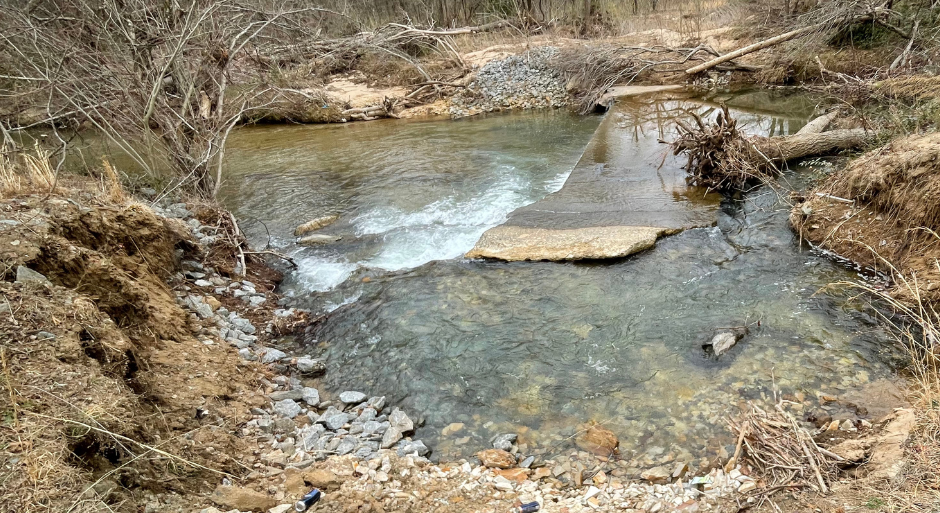
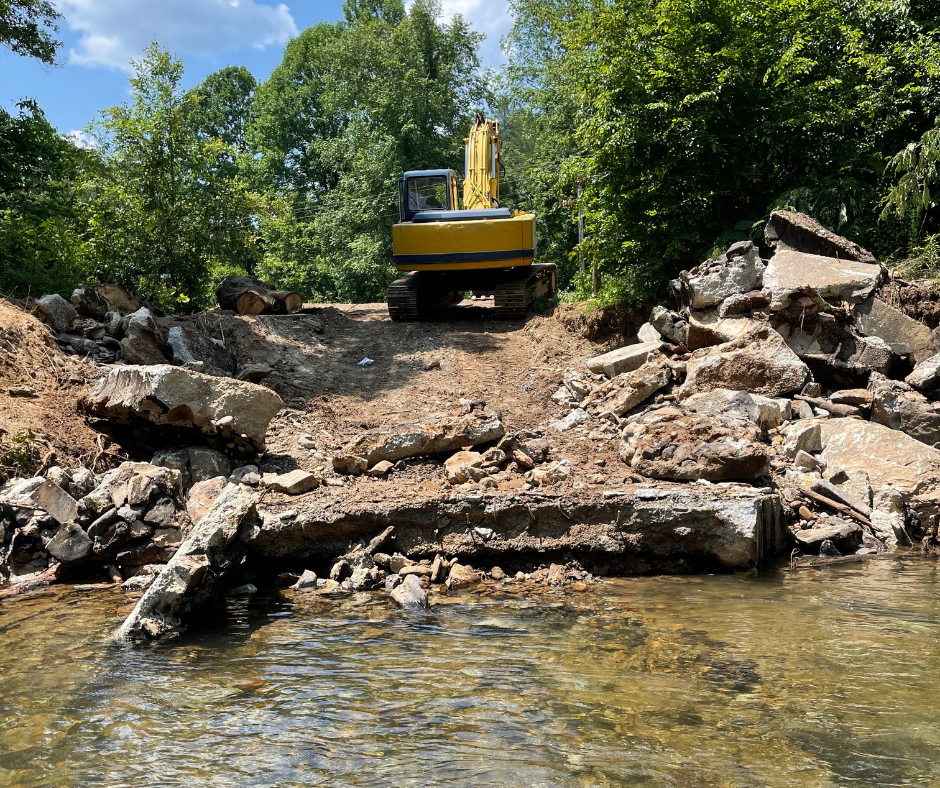
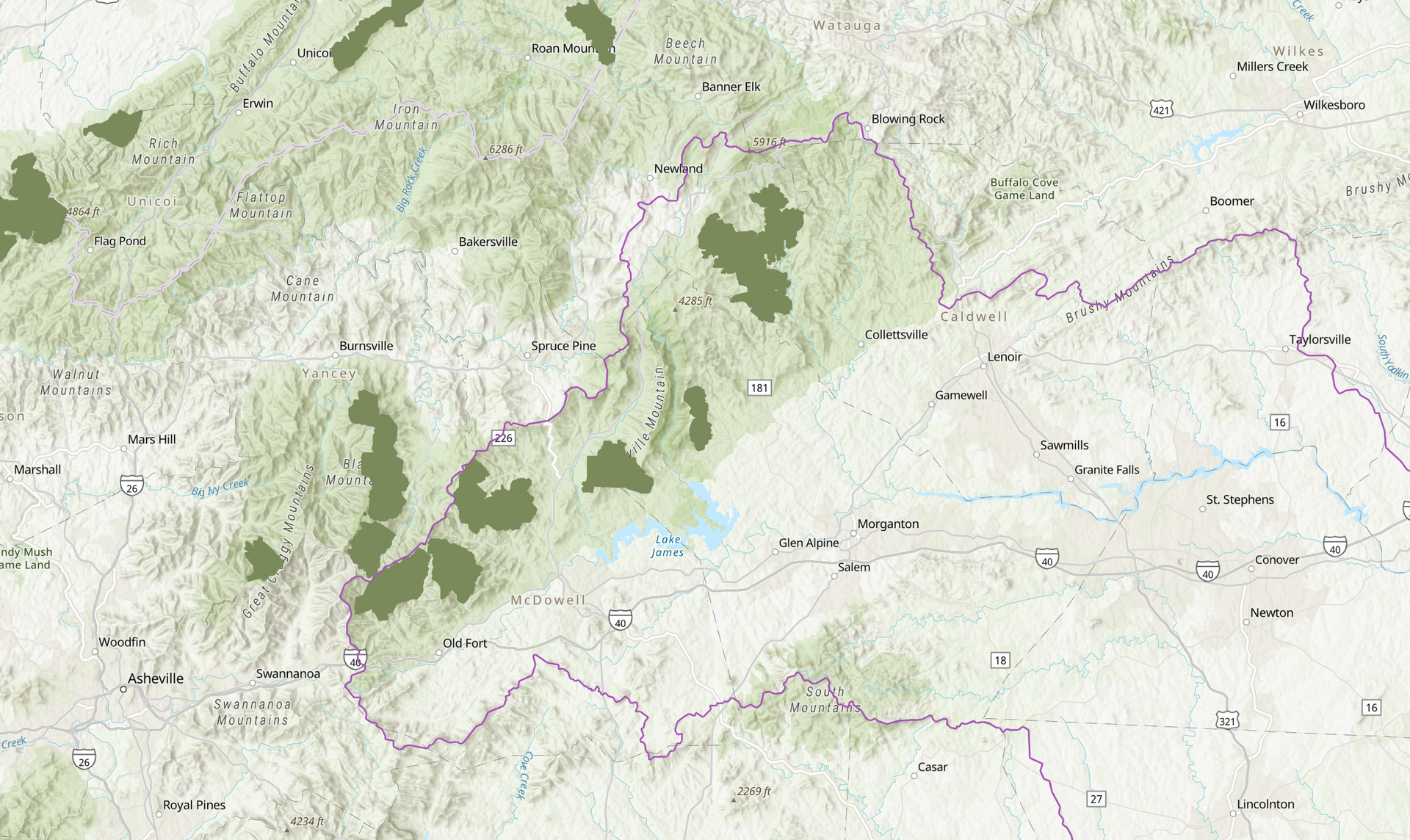
If you've ever visited the Henry Fork, a tributary that merges with the Jacob Fork to create the South Fork River of the Catawba, you know what a hidden gem it is. With some locations designated as outstanding water resources (OWR) by the state of NC, the Henry Fork has some of the most pristine habitats of the entire South Fork Watershed. However, an old logging bridge located on the Henry Fork in Morganton, NC has, over the years, collapsed and filled in with sediment and debris, consequently becoming an obstruction detrimental to the health of the river.


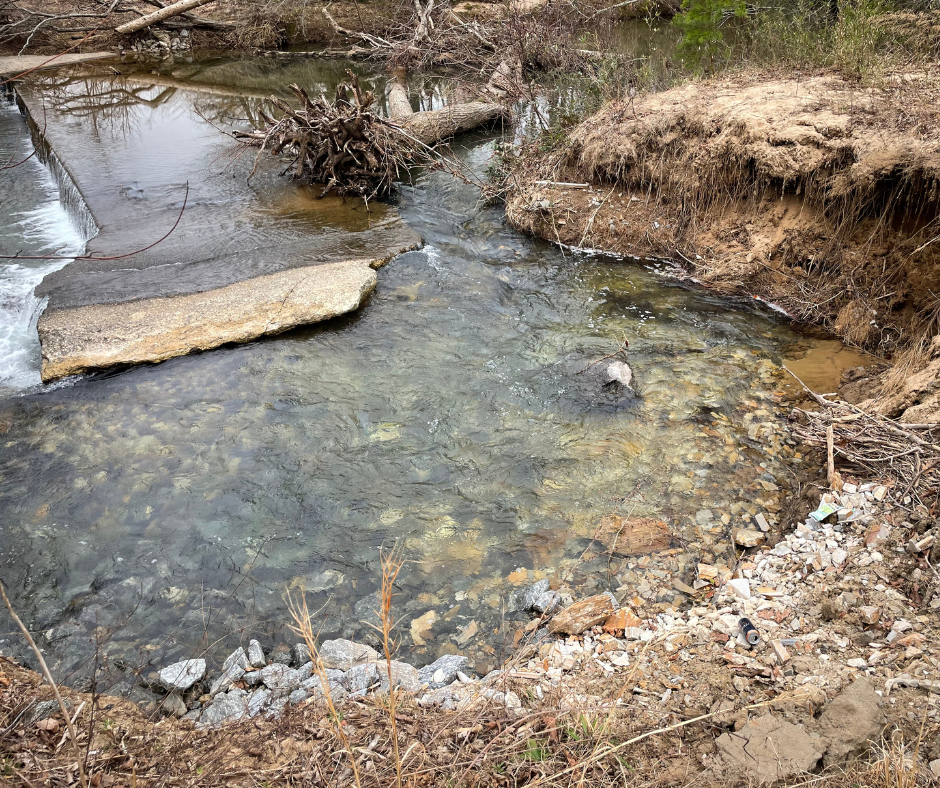
As time and incorrect usage turned the low bridge into a blockage, the river's flow was directed into the riverbank, causing extreme erosion that cut almost 15 feet into the bank. The erosion increased the sedimentation in the water, which, in turn, decreased water quality and made the habitat much less hospitable for aquatic critters (including four state-threatened fish species) that rely on clear water to find food and shelter. Additionally, the segmentation of the river caused by this blockage has hindered the passage of a variety of creatures, from native fish to recreational kayakers wanting to paddle through this gorgeous stretch of water.


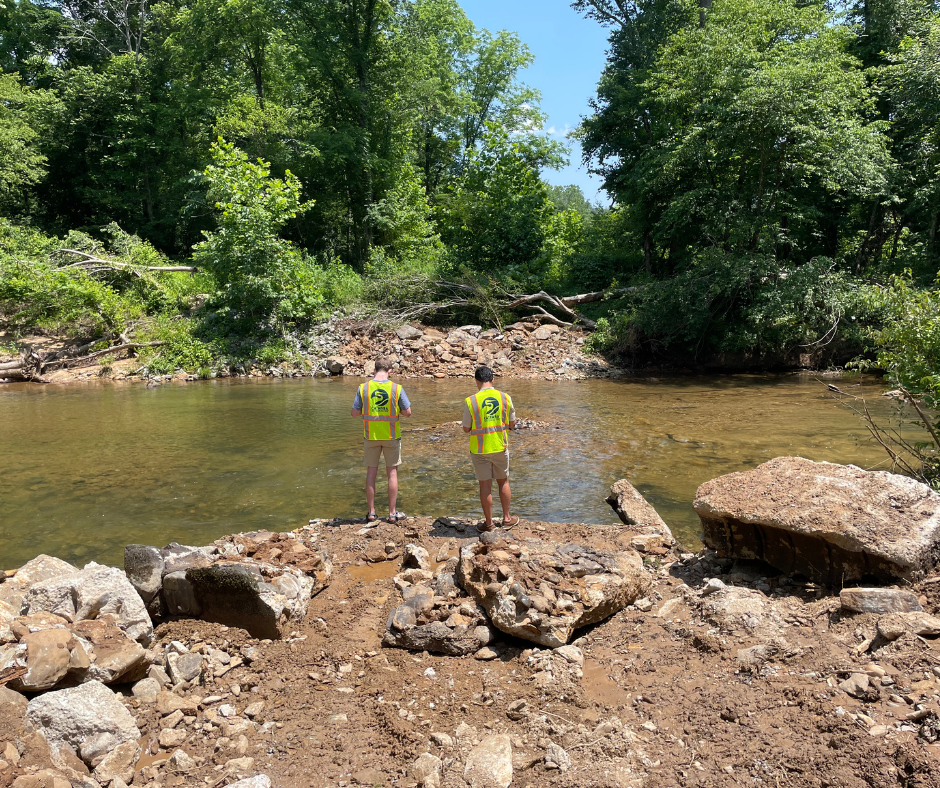
Identified as a potential restoration site in our South Fork Watershed Restoration and Protection Plan, Catawba Riverkeeper is excited to announce that the old logging bridge barrier on the Henry Fork has now been removed! Thanks to the hard work of our South Fork Watershed Manager, Jenn Dunn, collaborative efforts with local landowners, generous funding from the Rostan Family Foundation, and in partnership with Foothills Conservancy of NC, we have been able to take a big step toward a healthier habitat by restoring the natural flow of this segment of the river.


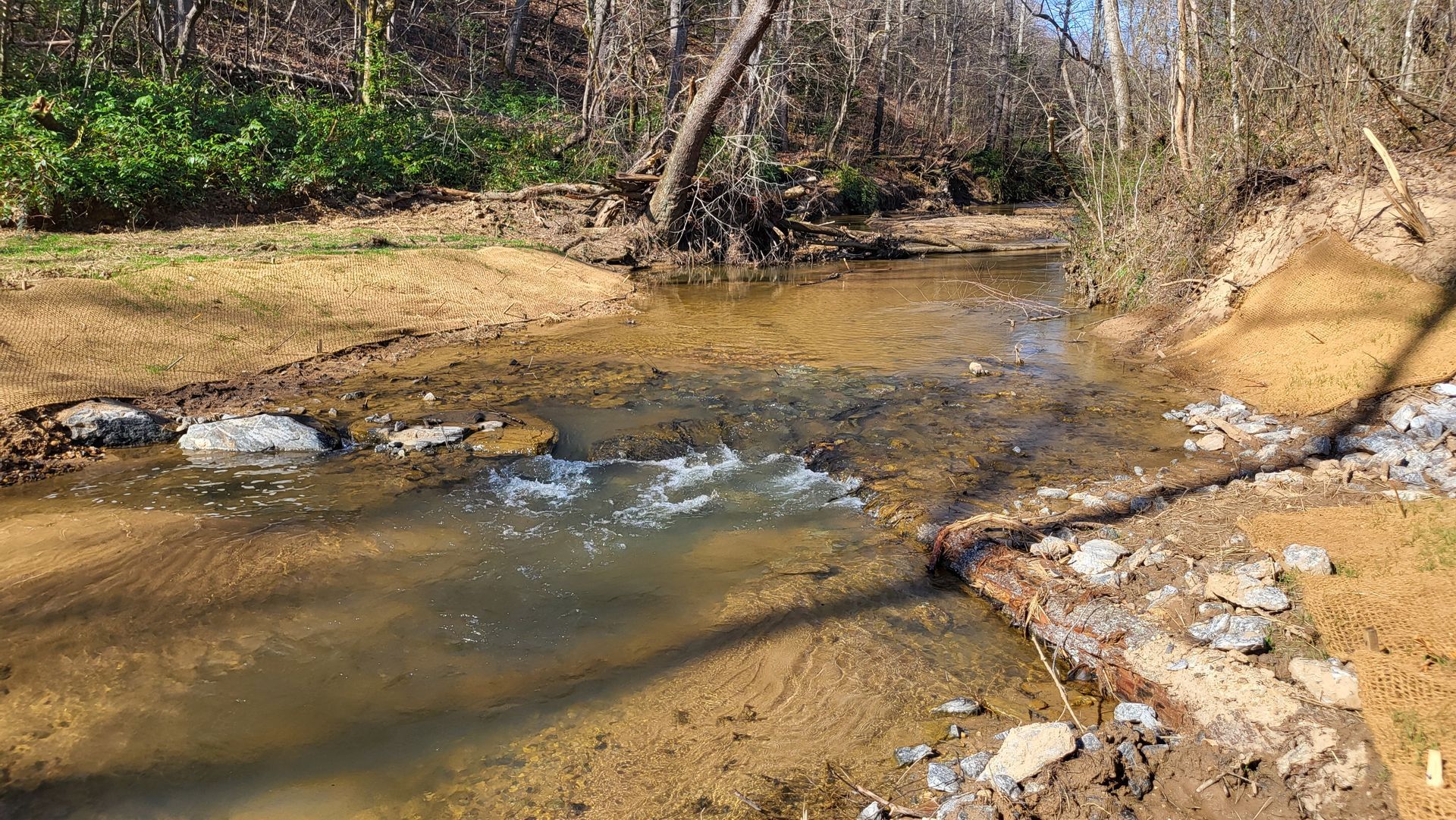
Though the barrier has been removed, our restoration efforts do not end there. Concrete pieces from the barrier will be used as armoring on the bank to help reduce future erosion. Later this month, our staff will also plant live stakes and native seeds along the bank to stabilize the shoreline further.


Through this project, water quality will improve as less sediment is eroded into the water. Native aquatic animals, including threatened species such as the Seagreen Darter, Thick Lip Chub, Santee Chub, and the South Mountains Crayfish (found only in the Henry and Jacob Forks), will have greater mobility to seek conditions needed for survival. Residents of the area will no longer need to worry about erosion encroaching on the nearby road, and recreational paddlers will flow easily from Foothills Conservancy's Corbitt River Access down this beautiful free-flowing stretch of the Henry Fork.


Join us in celebrating this restoration win in the South Fork Watershed, and consider exploring the Henry Fork for yourself this summer! You can support the ongoing monitoring and improvement of this site and other projects like this by donating today.

December 17, 2025
Catawba Riverkeeper is pleased to announce that Dr. Mo Drinkard has been hired as their new Executive Director. A standout among over 100 applicants, Mo was offered the position by the Catawba Riverkeeper Board of Directors search committee on Thursday, November 20th, and she assumed her role as leader of the organization on Monday, December 1st, 2025. Catawba Riverkeeper Brandon Jones, who participated on the search committee, shared that “Mo’s education, experience, and passion are directly aligned with the organization’s mission and needs. We are excited for her perspective and leadership in continuing the critical work of protecting our waters.” Mo is a mission-driven non-profit leader, professor, and scholar with a passion for building strong organizations, nurturing future leaders, and tackling big challenges in conservation, equity, and education. With over 20 years of experience spanning academia (Kent State University, Brevard College, Miami University), community partnerships, and environmental science, she's worn many hats: executive director, grant writer, program architect, DEIB strategist, faculty and student mentor, and not often enough, field biologist in muddy boots. Mo's work lives at the intersection of applied research and social change. She specializes in transforming great ideas into funded, functional, and impactful programs, whether that’s designing experiential learning curricula, guiding strategic organizational turnarounds, or helping community-based groups access the resources they need to thrive. From leading national workforce development initiatives to restoring urban watersheds (Doan Brook Watershed Partnership) and mentoring the next generation of environmental scientists, Mo brings an entrepreneurial spirit and deep subject matter expertise in biology, ecology, sustainability, and inclusion. Mo believes that science is for everyone, and that real change happens when we build spaces where all voices can lead. “I am honored and excited to offer leadership for the next chapter of Catawba Riverkeeper’s work. I believe deeply in the mission and am fully invested in the health and future of this watershed. I look forward to getting to work supporting the waterways, communities, and people that make up this expansive and impactful basin,” Dr. Drinkard said. Catawba Riverkeeper, currently one of the ten largest riverkeeper organizations in the United States, boasts over 8,000 members across the 26 counties of North and South Carolina where the waters of the Catawba flow. As the fifth Executive Director of the organization, Mo will bring new and innovative ways to advance the work of her predecessors and the mission of the organization in this new chapter of Catawba Riverkeeper’s leadership. Mo will be supported by 11 full-time staff and 22 volunteer board members to preserve, protect, and restore the Catawba River so that it sustains plentiful, clean water for generations to come.
October 13, 2025
Thank you to our 2025 Catawba Riversweep volunteers!
October 13, 2025
John Searby Steps Down as Executive Director After 6 Years of Leadership