Retail in 2022
2022 Retail Recap
2022 has been an exciting year in so many ways for Catawba Riverkeeper! We’ve collected more samples than any previous year, educated more young people than ever before, and engaged thousands through our on-the-water and volunteer programs. One of the more interesting, challenging, and beneficial changes this year has been the addition of our retail spaces at Catawba Riverkeeper. This year we added 3 unique retail spaces, each with its own slate of programs and offerings that allow the public to engage with our mission and our staff in fun, interesting, and informational ways. Here’s a snapshot of our new spaces and what to expect when you visit:

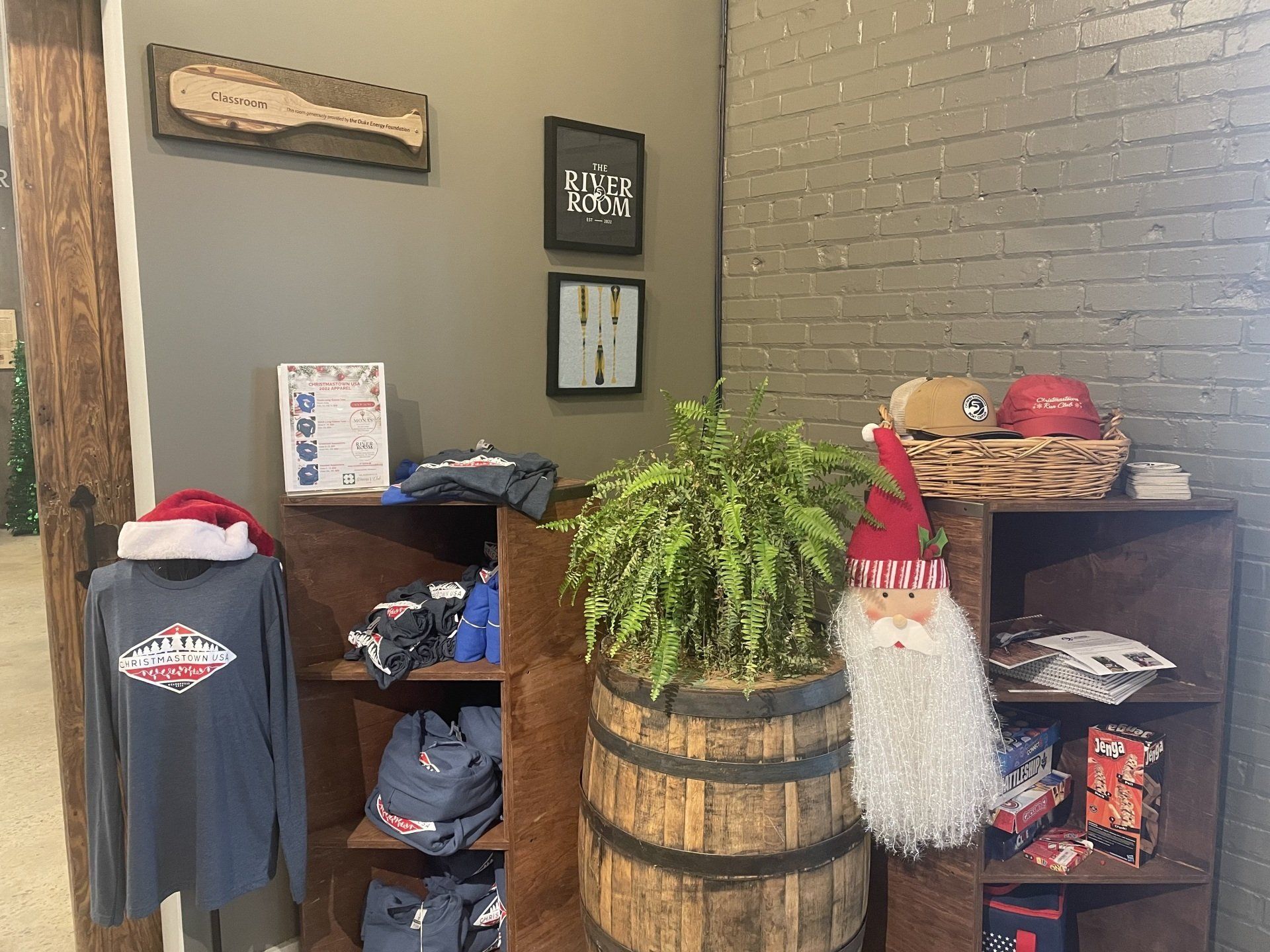
The River Room is the front of house portion of our new headquarters in downtown McAdenville. Located at 102 Main St, Suite 100, McAdenville, NC, The River Room is the anchor tenant of the Dynamo 31 building, an adaptive reuse project that converted a 1940’s era mill building to modern Class A office space with a retro vibe. The River Room is a taproom that serves 12 beers on tap (all from breweries who take their water from the Catawba) and a selection of canned beer, wine and craft cocktails as well. We operate the River Room as a private club with ALL members of Catawba Riverkeeper included at no additional membership fee. Guests who choose not to become full members of Catawba Riverkeeper can purchase a limited membership to enjoy the River Room the day of their visit. In addition to the taproom, The River Room also offers a multi-purpose space that is available for rental by members and a patio to enjoy the lovely McAdenville Lake and surrounding area. The River Room is open Wed-Fri, 4-9p and Sat/Sun, 2-9p.
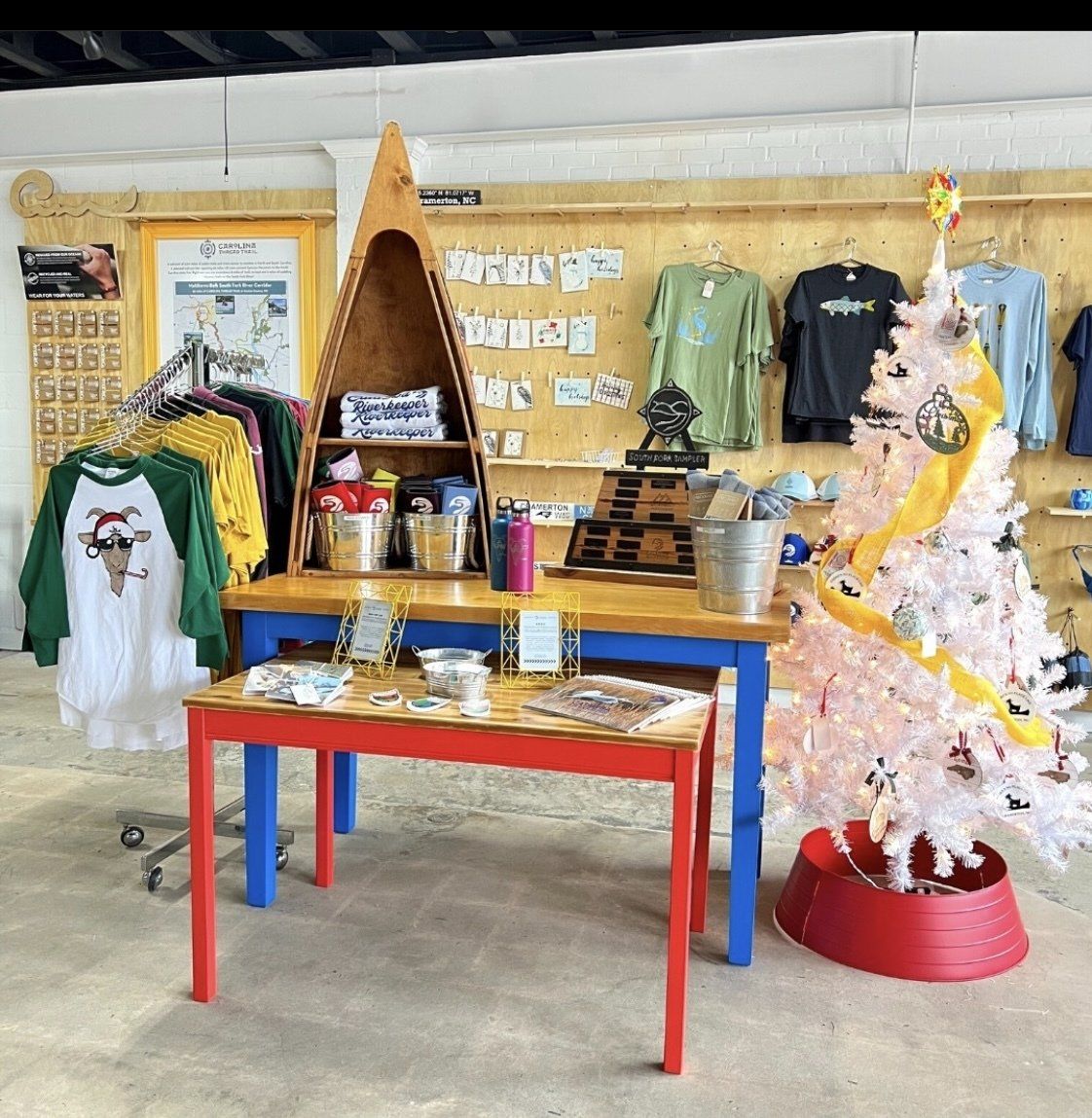
Confluence is an Arts, Music, and Recreation Center on the banks of the river in Cramerton, NC. Catawba Riverkeeper operates the space Thur/Fri, 4-9p, Sat, 2-9p, and Sun, 12-6p (Hours subject to change seasonally with the weather). Confluence is funded through the generous support of the Town of Cramerton and all of the proceeds of the programs, merchandise, and beverage sales go to fund the South Fork Collective, a project led by Catawba Riverkeeper that includes all of the municipalities, non-profits, utilities, and several for profit businesses in Gaston County who rely on the South Fork for the health and vibrancy of their communities. Confluence is unique in that it promotes not only the health of the river itself, but also the life in riverfront communities. Through partnership with local artists, musicians, and recreation organizations we offer residents and visitors alike the opportunity to engage with local art and music or rent a kayak, bike, fishing equipment, or other outdoor recreation items to get out and play! The bar at Confluence offers a wide variety of beer, wine, and cider as well as soft drinks and water. Our robust retail space features merchandise from the Town of Cramerton, Catawba Riverkeeper, and several other partners. And our art gallery includes dozens of pieces of art by local artists for sale in a variety of mediums. Once a week we feature local musicians in both free and ticketed concerts and you can participate in the music and art through classes for adults and children alike.
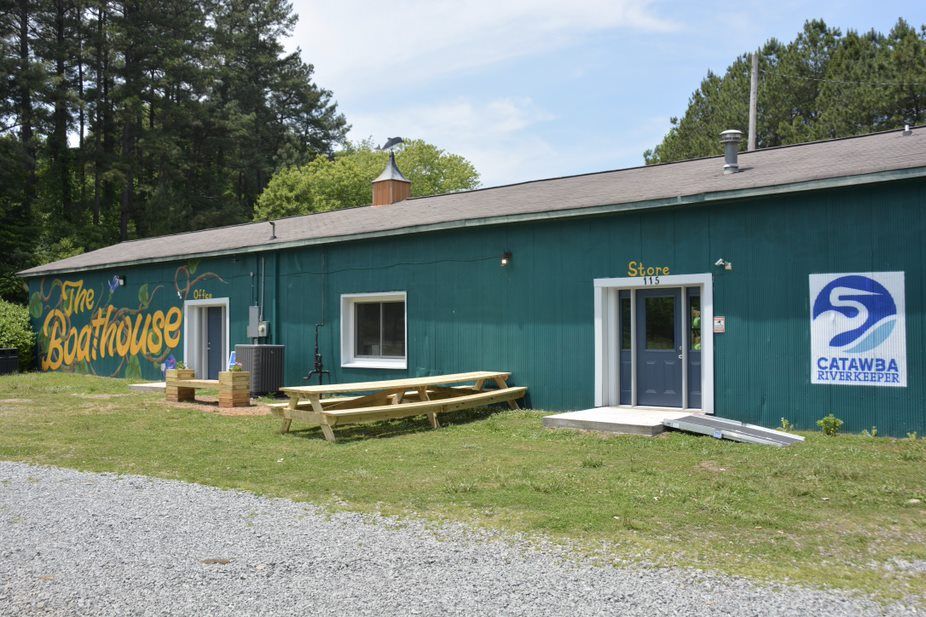
The Boathouse, our first foray into retail, opened in spring 2021 as a kayak outfitter and trailhead store at the South Fork Trail parking area in McAdenville, NC. For much of 2021-22, The Boathouse also served as our temporary offices. The Boathouse features seasonal public recreational offerings Saturdays and Sundays, May-September and supports private events year round. The Boathouse provides kayak rentals during the paddling season and also is the gathering place for many of our guided kayak programs throughout the year. Guests can grab any last minute items they might have forgotten for their trip like water, dry bags, sunscreen, or apparel as well as enjoying a cold beer, seltzer, or soft drink after their hike, bike, or paddle on the South Fork Trail or South Fork Blueway. There are public bathrooms accessible to all during normal business hours and the property also includes all-important storage for our boats, kayaks, canoes, trailers, trucks, and many other program supplies.
We are proud of all three of our retail spaces and we’re confident that no matter what you’re looking for you can find it at one of these spots. It has been amazing to see the increased level of awareness for Catawba Riverkeeper and our important work to preserve, protect, and restore the Catawba-Wateree River basin because of our public facing spaces. We anticipate that in 2023 approximately 15% of our revenue will be generated from our retail spaces and we invite you to come out to any and all of them to not only have fun with friends and family, but also to support our work. If you are interested in booking a private event at any of our spaces, please email vanessa.c@catawbariverkeeper.org for rates, availability, and space details. We hope to see you on and near the river in 2023!