Chimney Swift Tower Built at Outdoor Classroom
November 13, 2023

Chimney swift tower joins other shelters for birds to reside on campus

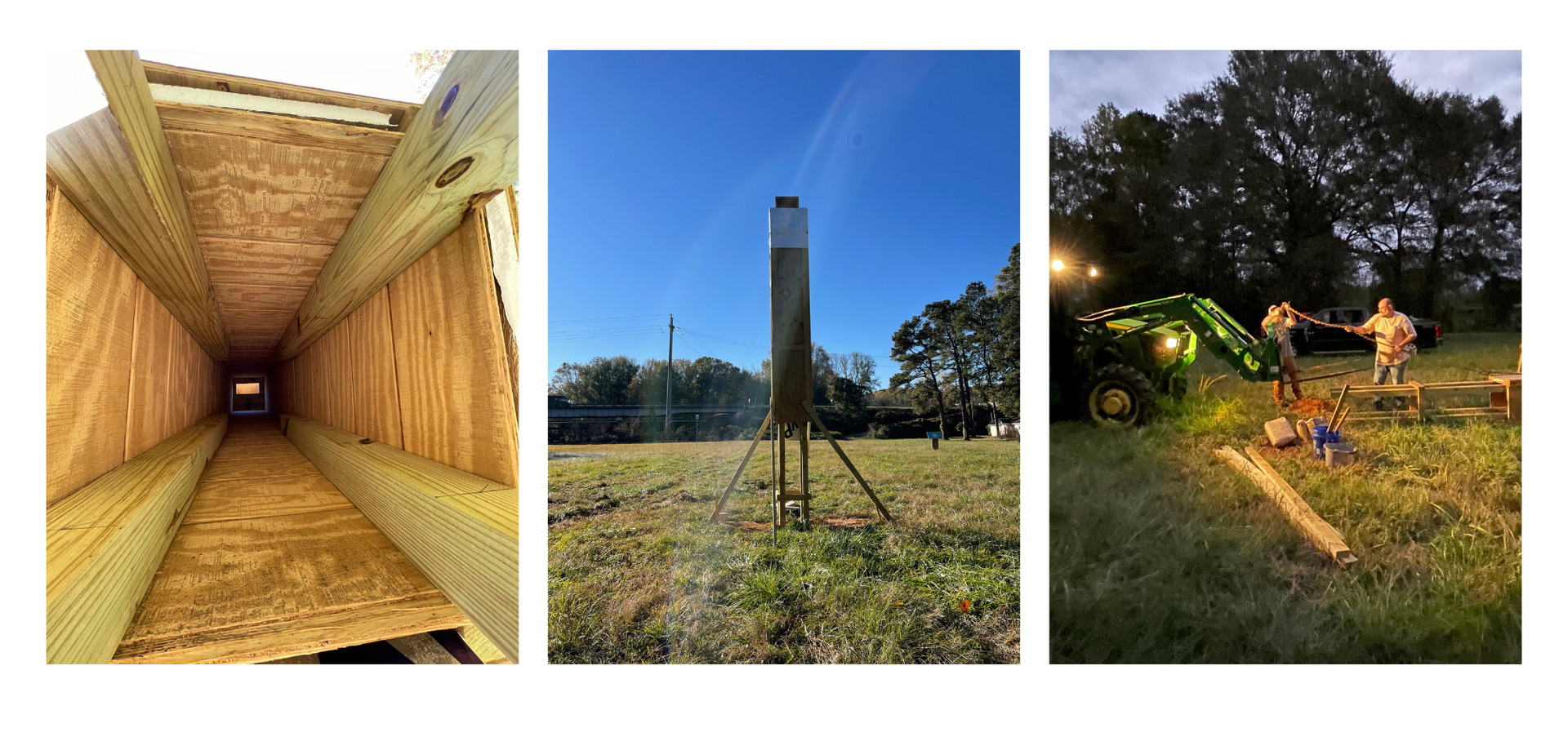
You may be wondering why there is now a new structure (pictured above), that looks like a stand-alone chimney, on our outdoor classroom campus? This is a chimney swift tower, a safe spot for the chimney swift bird to shelter! The chimney swift tower joins several other shelters on the outdoor classroom campus for birds and bats to reside. 


Chimney swifts are small, quick birds that spend a lot of their time flying in the air. Due to deforestation, and the increase in buildings, these birds began living inside actual chimneys (which look and feel a lot like hollow trees). The chimney swift needs a habitat where they can cling to vertical walls, as they don't perch on tree branches and limbs. Chimney swift towers are dedicated homes for the bird to find shelter. 


The swifts migrate between the eastern half of North America and the western half of South America. They eat many bugs that thrive in watery habitats, just like our Outdoor Classroom. 


You can learn more about the chimney swift here: https://www.allaboutbirds.org/guide/Chimney_Swift/overview.  


Building the chimney swift tour took a collaborative effort, and we are so thankful for those who helped to make it happen! Myers and Chapman volunteered their expertise and materials to construct the tower itself. The outdoor classroom’s own property maintenance volunteers, Larry and Butch, helped dig the post-holes, which is not an easy task to do by hand! Big thank you to Charlotte ToolBank for renting us the tools we needed to complete this project. Lifting up such a heavy, tall structure posed a challenge; our partners at Daniel Stowe Botanical Garden connected us with, Dixie Forestry and Grading, that had the equipment to get the job done safely. We are so very grateful for Jackie Bagley, Chad Fields, Lance Canty, and Connie Wade from Catawba Nation who contributed their time and talents to help put the metal flashing on top of the chimney swift and get the structure on its feet, even after the sun went down. 


We hope to see birds enjoying their new home soon!  
May 27, 2026
On the evening of May 26th, 2026, Catawba Riverkeeper Brandon Jones attended the Charlotte City Council Public Meeting. At this meeting, he shared our organization's comments on the proposed 150-day data center moratorium. These comments can be read below. "The Catawba Riverkeeper Foundation is a member-funded environmental nonprofit that educates, advocates, and protects the Catawba-Wateree River and all its tributaries. Our organization represents over 8,000 active members and nearly 3 million citizens who rely on the watershed for drinking water, recreation, and electricity. We are concerned that the growth of local data centers may overallocate our limited resources and decrease our ability to respond to drought. We appreciate the opportunity to comment on the proposed 150-day moratorium and strongly support the staff's recommendation to adopt it. Additionally, if adopted, we recommend that the study consider a tiered approach, transparency, and net water consumption. For our water resources, the most important data center metric is net water use. A 400 MW facility—like the one now under construction on Moores Chapel Road—may actually evaporate more water indirectly than directly for cooling. The nearby Catawba Nuclear Station uses approximately 30 MGD to produce 2,300 MW or 5.2 MGD from Lake Wylie per 400 MW. However, without transparency and reporting, it is difficult to know the current impact of these data centers and almost impossible to accurately forecast the industry's future. The most accurate forecast of our region's water resources is the Catawba Wateree Water Management Group’s 2026 Integrated Water Resources Plan. Unfortunately, this plan explicitly does not include increases in water use from data centers due to limited reliable information. It is absolutely critical that our community has accurate information. We need full transparency on the planned electrical and water use of large data centers. A ban of nondisclosure agreements between elected officials and developers could help alleviate suspicion and allow communities to make informed decisions about tradeoffs. The potential direct and indirect impact s of a project should be modeled by the CWWMG to determine its actual impacts. Those impacts could be mitigated by funding water conservation projects, as some data centers have already proposed. Once operating, we need reporting on the actual water and energy use. The cumulative impact must be understood to ensure capacity and resiliency. Water withdrawers from the Catawba utilize a Low Inflow Protocol during drought to help stretch the available supply. Large data centers need conservation plans that comply with this plan. It is hypocritical to ask residents and some businesses to restrict water use while permitting facilities that cannot or will not do the same. Most years, there is plenty of water for drinking, irrigation, ecological flows, and industry in the Catawba. However, droughts such as 2001, 2007, and today expose our vulnerabilities. These droughts are more likely in a warming climate, and we are becoming less resilient with a growing population and industrial demands. Sustainable water management requires careful planning and robust coordination between users, including data centers."
By Susannah Bryant March 19, 2026
Greg Nance has had his boots on the ground since the storm subsided.
February 19, 2026
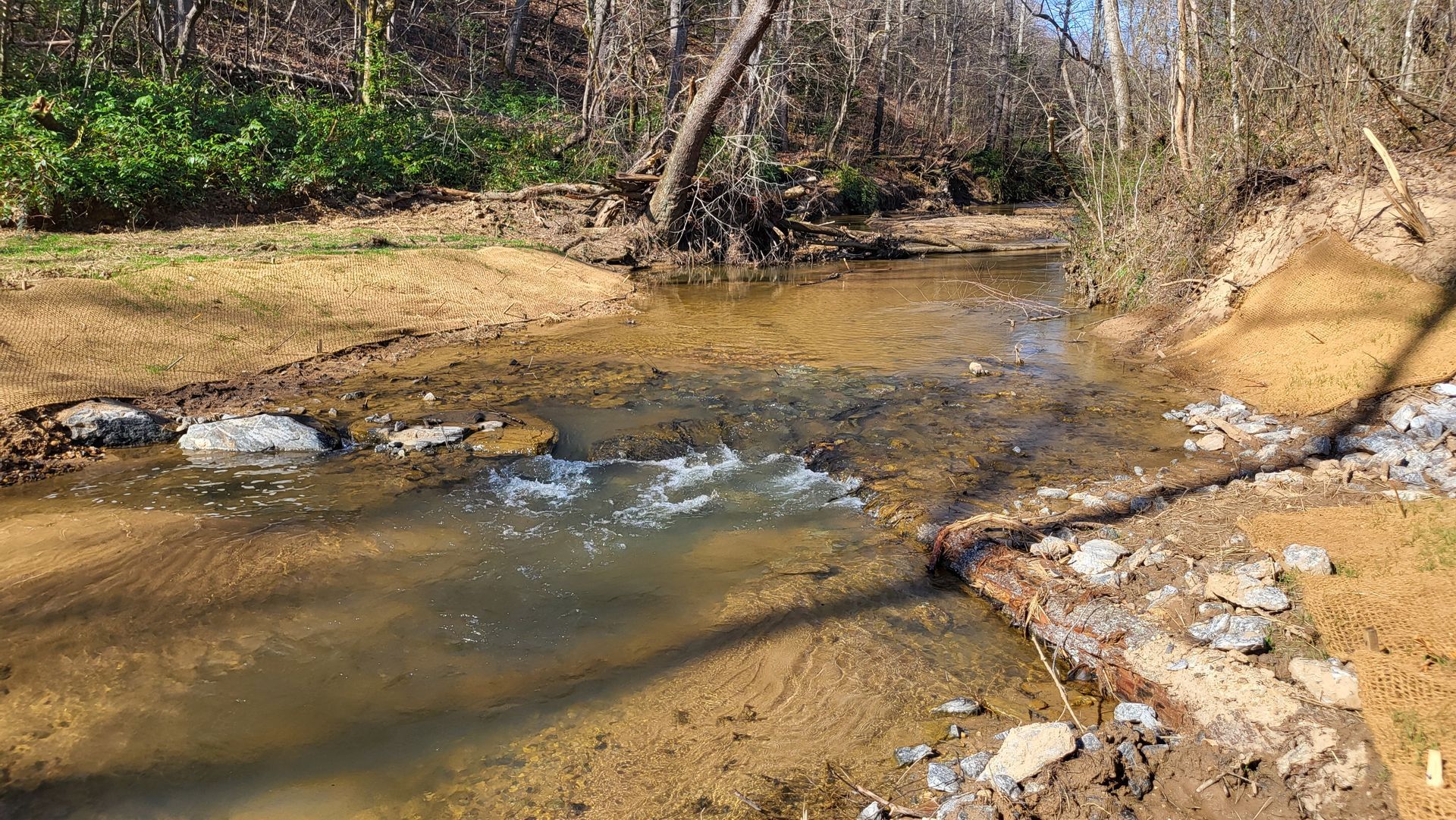
Live staking is a streambank restoration approach that reduces erosion and sediment pollution. This is the practice of planting dormant branch cuttings of native plants along streambanks (also known as riparian zones) to help hold soil in place along the waters' edge. Live stakes are planted along with native plant seeds and shrubs to create riparian buffers, which help prevent sediment from becoming a stream pollutant by securing the soil in place with good root systems. Riparian buffers also filter out other pollutants, such as chemicals, oils, fertilizers, and trash, before they enter our waterways.