2023 Wateree River Survey

November 8, 2023


3 days. 2 nights. 76.25 miles paddled. 31 alligators.
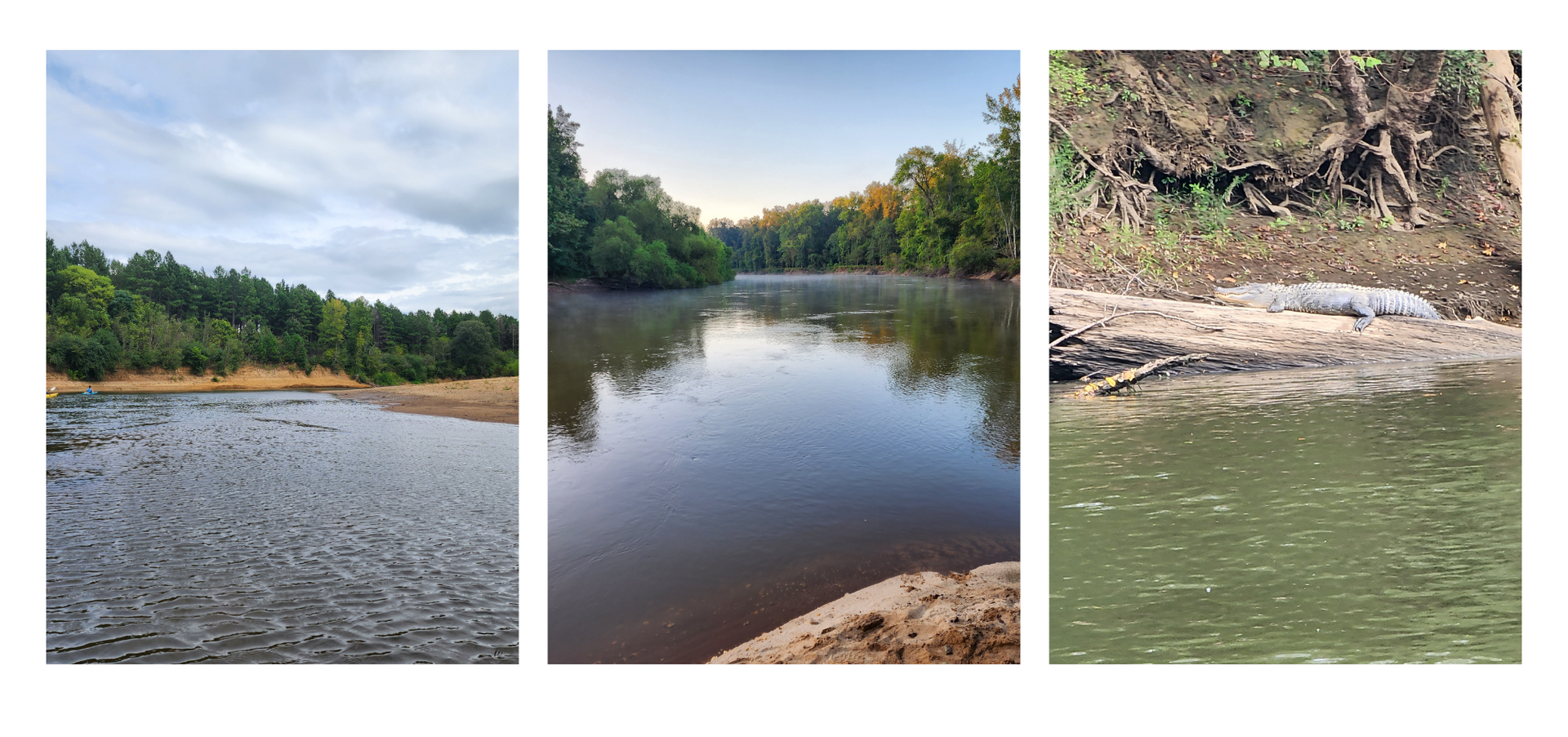
 

The Wateree River runs 80 miles through Kershaw, Sumter, and Richland counties in South Carolina. Currently, this is the least developed part of our basin, though that could change due to continued development and the expansion of cities in the area. It is difficult to assess many parts of the river due to limited public access points and its remote location. 


Rachael, our Southern Basin Watershed Manager, Brandon, our Riverkeeper, and Ryan, our Policy Manager, recently embarked on a 3-day, 2-night paddle survey of the Wateree River. Each year, we do a survey of this section of the river to gather more information and discover new issues we may need to address. 


Summary of the paddle  

Day 1: They began their journey with a 24.75-mile paddle. 


Day 2: Day two brought overcast skies and winds. They paddled 32 miles, taking advantage of having a break from the sun. 


Day 3: They covered 19.5 miles. The final day was challenging, with a strong sun, dozens of gators, and a low current down the Wateree River. The last two miles were spent paddling up the Congaree River. 


Observations and takeaways 

A frequent observation during the survey was that the Wateree River is actively meandering (click here for more information about what causes streams to meander). Despite the upstream dams and mostly regulated flows, there are many areas with steep riverbanks and active cuts. The Wateree River has constantly eroding banks, depositing sand bars, and even creating new oxbow lakes.  These findings highlight the need for buffers, among other preservation and restoration work, to protect both water quality and infrastructure. Our team observed agricultural fields, logging roads, and homes precariously close to actively eroding cut banks. While some property owners have attempted to slow this process via armoring the river channel with concrete and rock, this is a temporary solution which is both expensive and not sustainable. 


They also encountered over 30 alligators during the three days. 


The Wateree River is a designated Blue Trail. Unfortunately, due to its dynamic nature and general remoteness, much of the online information is outdated or incomplete. We are working with partners to help make it an easier trip for others who are interested in exploring this beautiful part of the river. 

December 17, 2025
Catawba Riverkeeper is pleased to announce that Dr. Mo Drinkard has been hired as their new Executive Director. A standout among over 100 applicants, Mo was offered the position by the Catawba Riverkeeper Board of Directors search committee on Thursday, November 20th, and she assumed her role as leader of the organization on Monday, December 1st, 2025. Catawba Riverkeeper Brandon Jones, who participated on the search committee, shared that “Mo’s education, experience, and passion are directly aligned with the organization’s mission and needs. We are excited for her perspective and leadership in continuing the critical work of protecting our waters.” Mo is a mission-driven non-profit leader, professor, and scholar with a passion for building strong organizations, nurturing future leaders, and tackling big challenges in conservation, equity, and education. With over 20 years of experience spanning academia (Kent State University, Brevard College, Miami University), community partnerships, and environmental science, she's worn many hats: executive director, grant writer, program architect, DEIB strategist, faculty and student mentor, and not often enough, field biologist in muddy boots. Mo's work lives at the intersection of applied research and social change. She specializes in transforming great ideas into funded, functional, and impactful programs, whether that’s designing experiential learning curricula, guiding strategic organizational turnarounds, or helping community-based groups access the resources they need to thrive. From leading national workforce development initiatives to restoring urban watersheds (Doan Brook Watershed Partnership) and mentoring the next generation of environmental scientists, Mo brings an entrepreneurial spirit and deep subject matter expertise in biology, ecology, sustainability, and inclusion. Mo believes that science is for everyone, and that real change happens when we build spaces where all voices can lead. “I am honored and excited to offer leadership for the next chapter of Catawba Riverkeeper’s work. I believe deeply in the mission and am fully invested in the health and future of this watershed. I look forward to getting to work supporting the waterways, communities, and people that make up this expansive and impactful basin,” Dr. Drinkard said. Catawba Riverkeeper, currently one of the ten largest riverkeeper organizations in the United States, boasts over 8,000 members across the 26 counties of North and South Carolina where the waters of the Catawba flow. As the fifth Executive Director of the organization, Mo will bring new and innovative ways to advance the work of her predecessors and the mission of the organization in this new chapter of Catawba Riverkeeper’s leadership. Mo will be supported by 11 full-time staff and 22 volunteer board members to preserve, protect, and restore the Catawba River so that it sustains plentiful, clean water for generations to come.
October 13, 2025
Thank you to our 2025 Catawba Riversweep volunteers!
October 13, 2025
John Searby Steps Down as Executive Director After 6 Years of Leadership