
Flooding in the Catawba-Wateree River Basin

Brandon Jones • January 18, 2024

Heavy rains led to polluted water in our basin
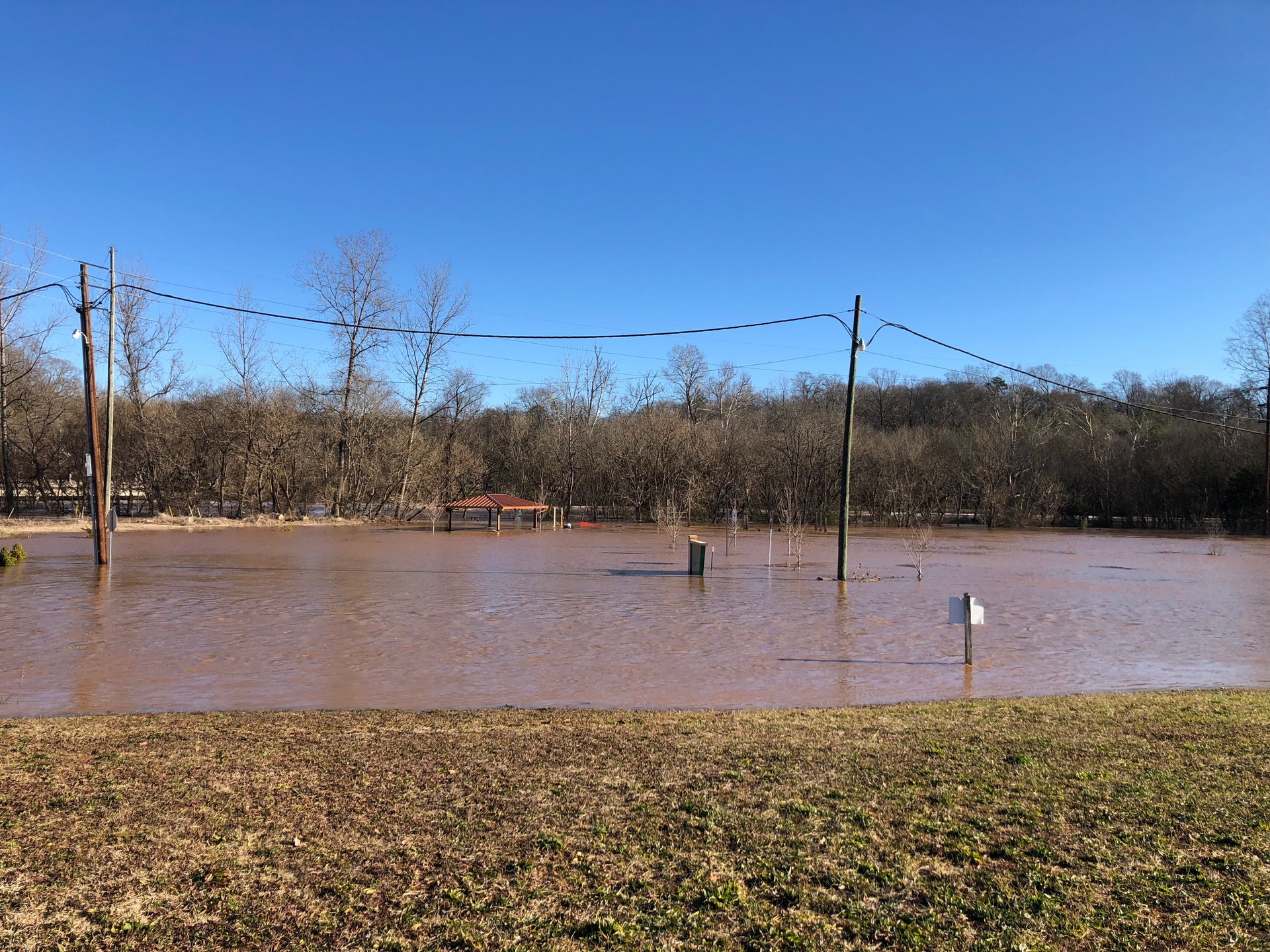
Heavy rain on top of saturated soils has led to extensive flooding across the southeast including the Catawba Basin this January. In addition to inundating structures and property, flood waters are usually heavily polluted. In developed areas rising creeks can damage and overwhelm sewage structures leading to hundreds of thousands of gallons of spilled sewage. Rain this month led to over 500,000 gallons of reported spills in our watershed alone. Our sampling in the South Fork and Great Falls found fecal bacteria levels greater than 10 times the recommended swimming standard. 


Unfortunately, flooding and the associated pollution are likely to increase. National and state climatologists predict that our area will receive roughly the same amount of precipitation but in fewer, larger storms. Also, population growth in the basin has led to the rapid development of fields and forests. This change in land use increases the quantity and intensity of stormwater. 


To mitigate these impacts and reduce stormwater pollution we need updated ordinances and more resilient infrastructure. Individuals can help by volunteering to replant eroded banks and by supporting legislative initiatives that prevent building in floodplains and protect the riparian buffer. Homeowners can reduce runoff from their property by disconnecting downspouts and installing rain barrels or rain gardens. We ask all concerned citizens to express to their elected officials that we need more proactive policies to address stormwater and flood resiliency.
December 17, 2025
Catawba Riverkeeper is pleased to announce that Dr. Mo Drinkard has been hired as their new Executive Director. A standout among over 100 applicants, Mo was offered the position by the Catawba Riverkeeper Board of Directors search committee on Thursday, November 20th, and she assumed her role as leader of the organization on Monday, December 1st, 2025. Catawba Riverkeeper Brandon Jones, who participated on the search committee, shared that “Mo’s education, experience, and passion are directly aligned with the organization’s mission and needs. We are excited for her perspective and leadership in continuing the critical work of protecting our waters.” Mo is a mission-driven non-profit leader, professor, and scholar with a passion for building strong organizations, nurturing future leaders, and tackling big challenges in conservation, equity, and education. With over 20 years of experience spanning academia (Kent State University, Brevard College, Miami University), community partnerships, and environmental science, she's worn many hats: executive director, grant writer, program architect, DEIB strategist, faculty and student mentor, and not often enough, field biologist in muddy boots. Mo's work lives at the intersection of applied research and social change. She specializes in transforming great ideas into funded, functional, and impactful programs, whether that’s designing experiential learning curricula, guiding strategic organizational turnarounds, or helping community-based groups access the resources they need to thrive. From leading national workforce development initiatives to restoring urban watersheds (Doan Brook Watershed Partnership) and mentoring the next generation of environmental scientists, Mo brings an entrepreneurial spirit and deep subject matter expertise in biology, ecology, sustainability, and inclusion. Mo believes that science is for everyone, and that real change happens when we build spaces where all voices can lead. “I am honored and excited to offer leadership for the next chapter of Catawba Riverkeeper’s work. I believe deeply in the mission and am fully invested in the health and future of this watershed. I look forward to getting to work supporting the waterways, communities, and people that make up this expansive and impactful basin,” Dr. Drinkard said. Catawba Riverkeeper, currently one of the ten largest riverkeeper organizations in the United States, boasts over 8,000 members across the 26 counties of North and South Carolina where the waters of the Catawba flow. As the fifth Executive Director of the organization, Mo will bring new and innovative ways to advance the work of her predecessors and the mission of the organization in this new chapter of Catawba Riverkeeper’s leadership. Mo will be supported by 11 full-time staff and 22 volunteer board members to preserve, protect, and restore the Catawba River so that it sustains plentiful, clean water for generations to come.
October 13, 2025
Thank you to our 2025 Catawba Riversweep volunteers!
October 13, 2025
John Searby Steps Down as Executive Director After 6 Years of Leadership