Great work, Summer Interns!
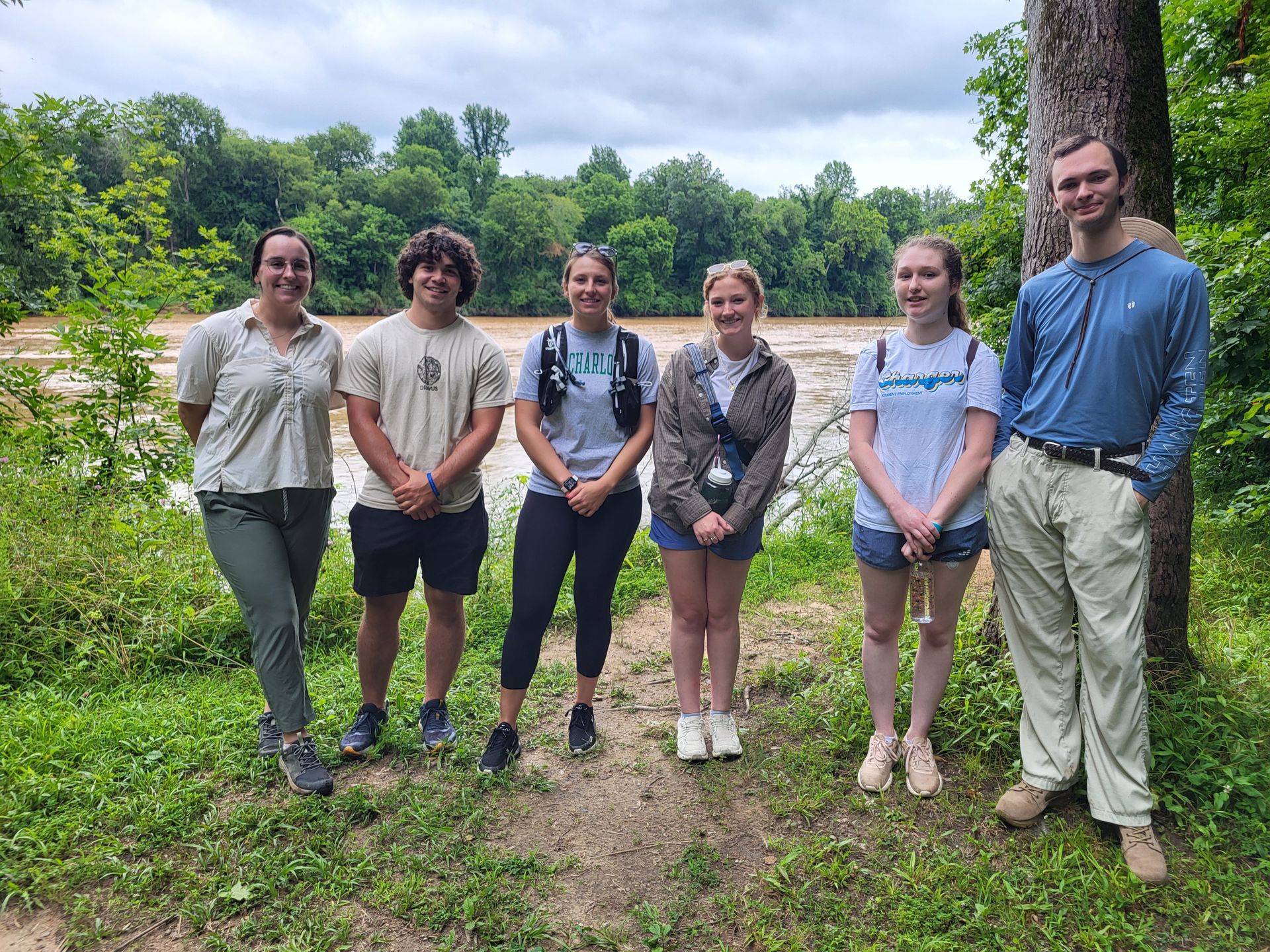
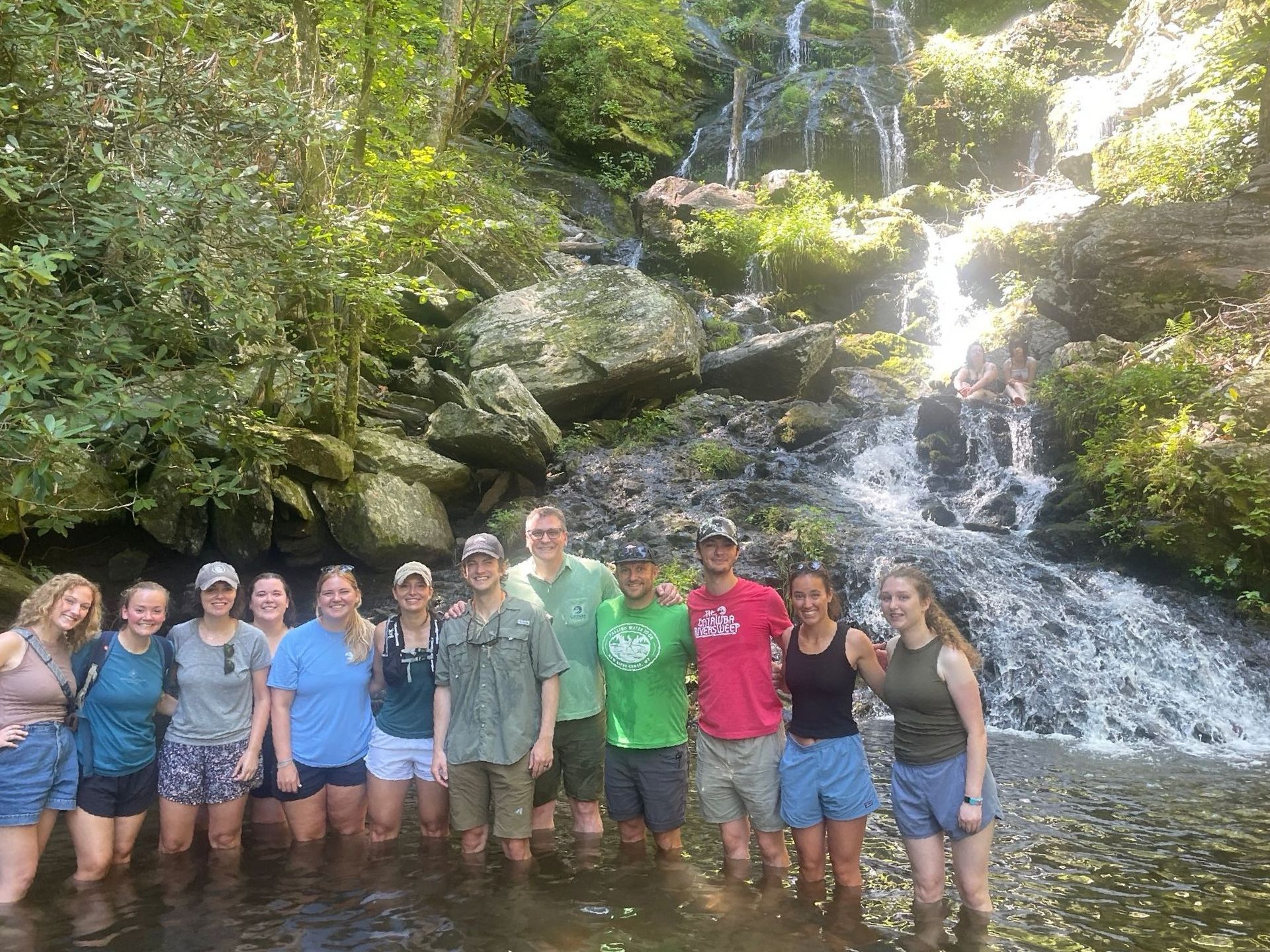
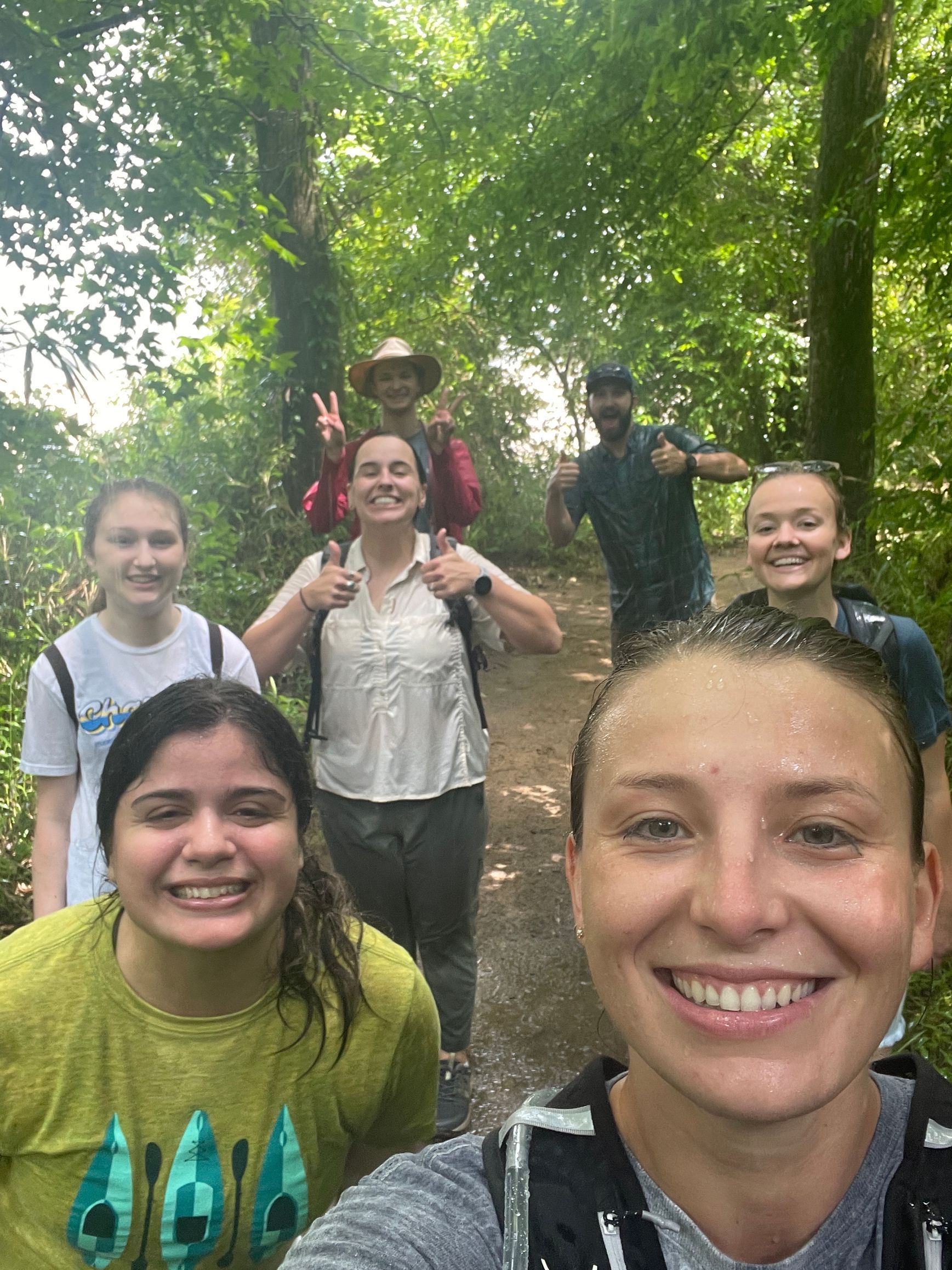
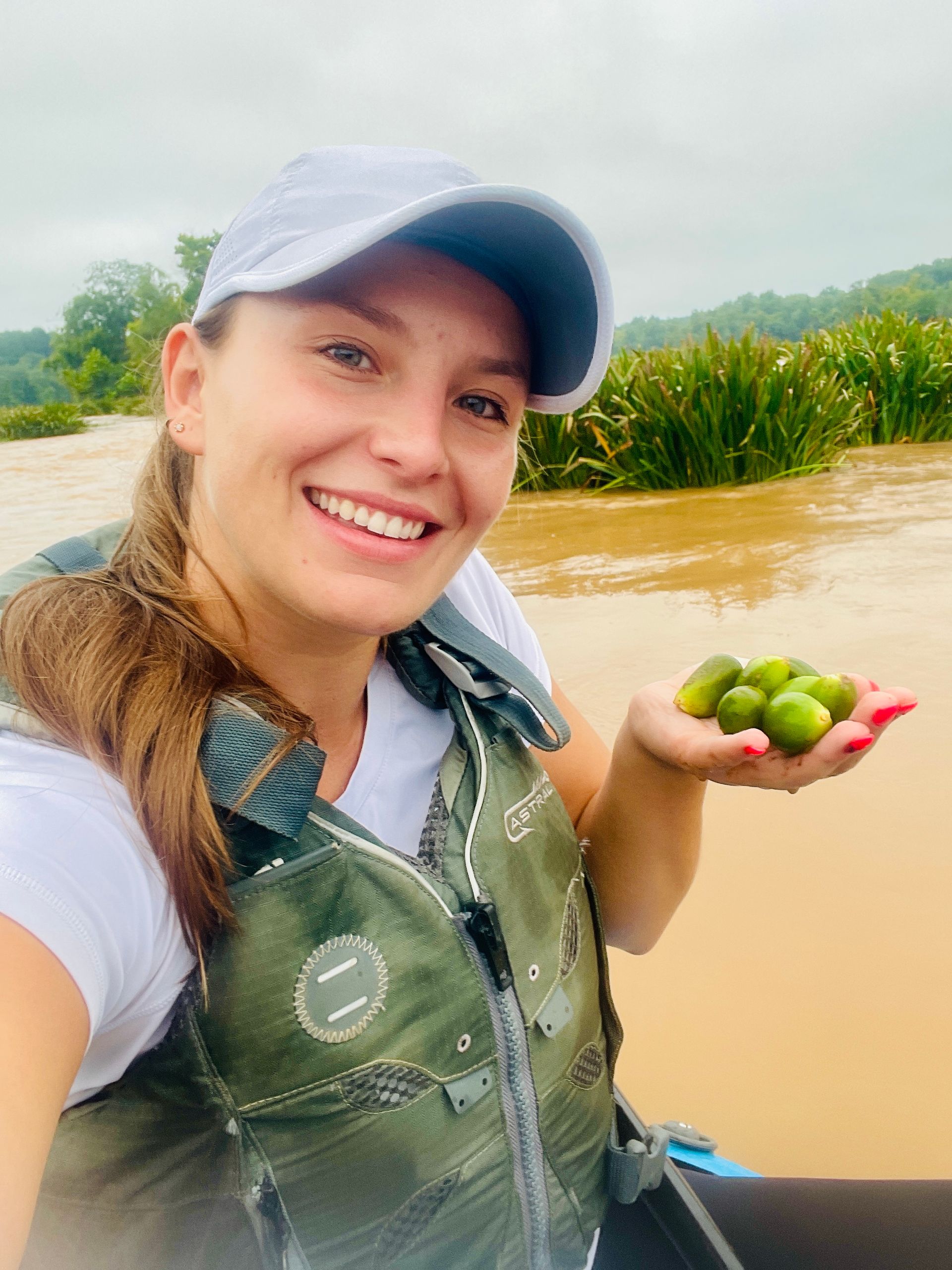
Every summer, the arrival of interns brings a flurry of activity and excitement to the Catawba Riverkeeper office. This year, we were fortunate enough to have 6 summer interns contribute their own unique skills to furthering the work of preserving, protecting, and restoring the Catawba-Wateree River Basin.
Read on to learn more about our interns’ experiences!
Will Garrett | South Fork Watershed Intern | Tufts University
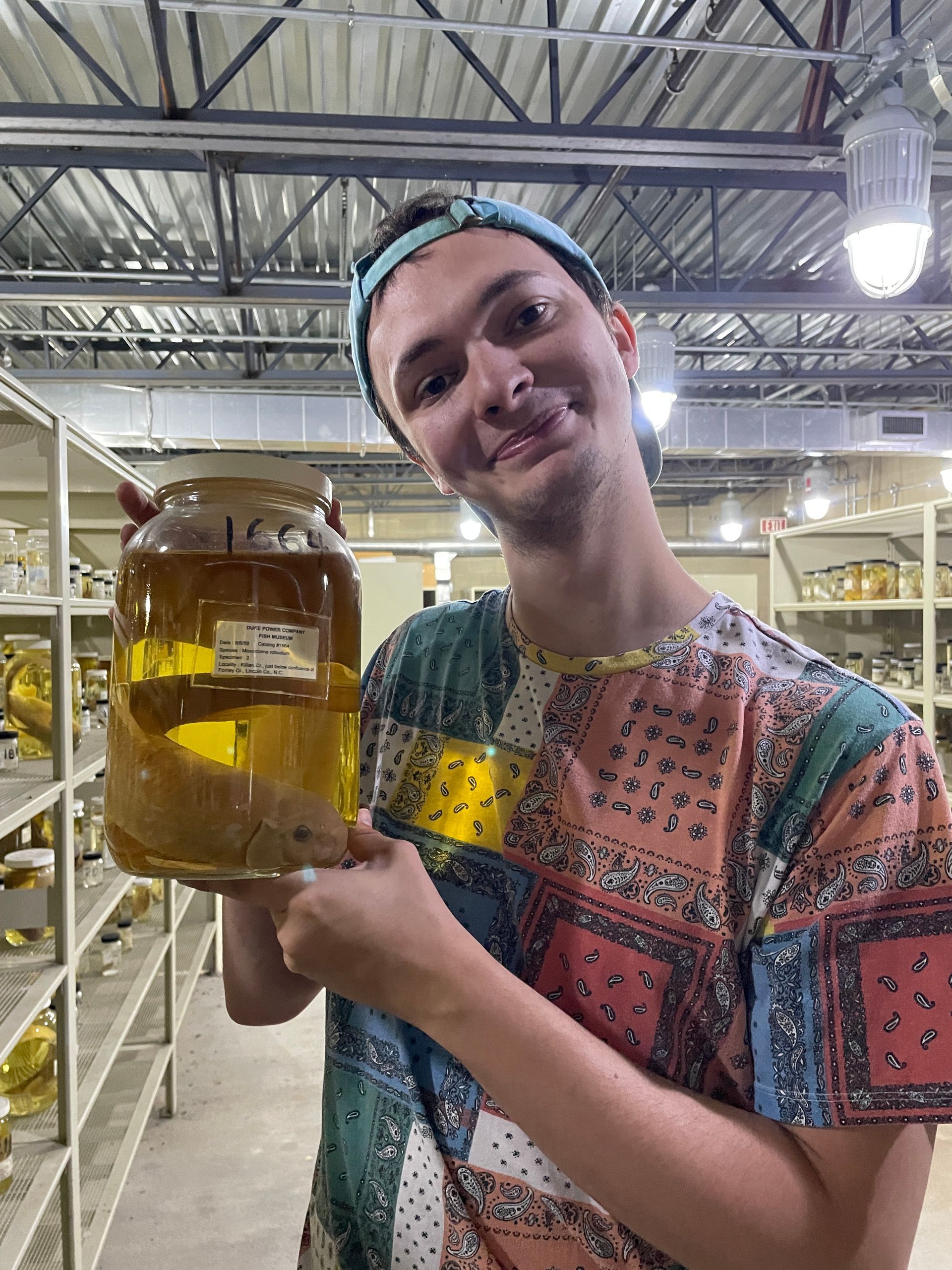
As the South Fork Watershed Intern, Will was able to work on a variety of projects, including the Swim Guide program, environmental justice mapping, fish cataloging, and permit reviewing. At the end of the summer, Will shared that “this internship enabled me to explore the scientific aspects of environmental and conservation work, helping me develop a new skill set that I can apply to future endeavors.” Click here to watch Will’s final presentation on Lithium!
Greta Hopf | Southern Watershed Intern | University of Alabama in Huntsville
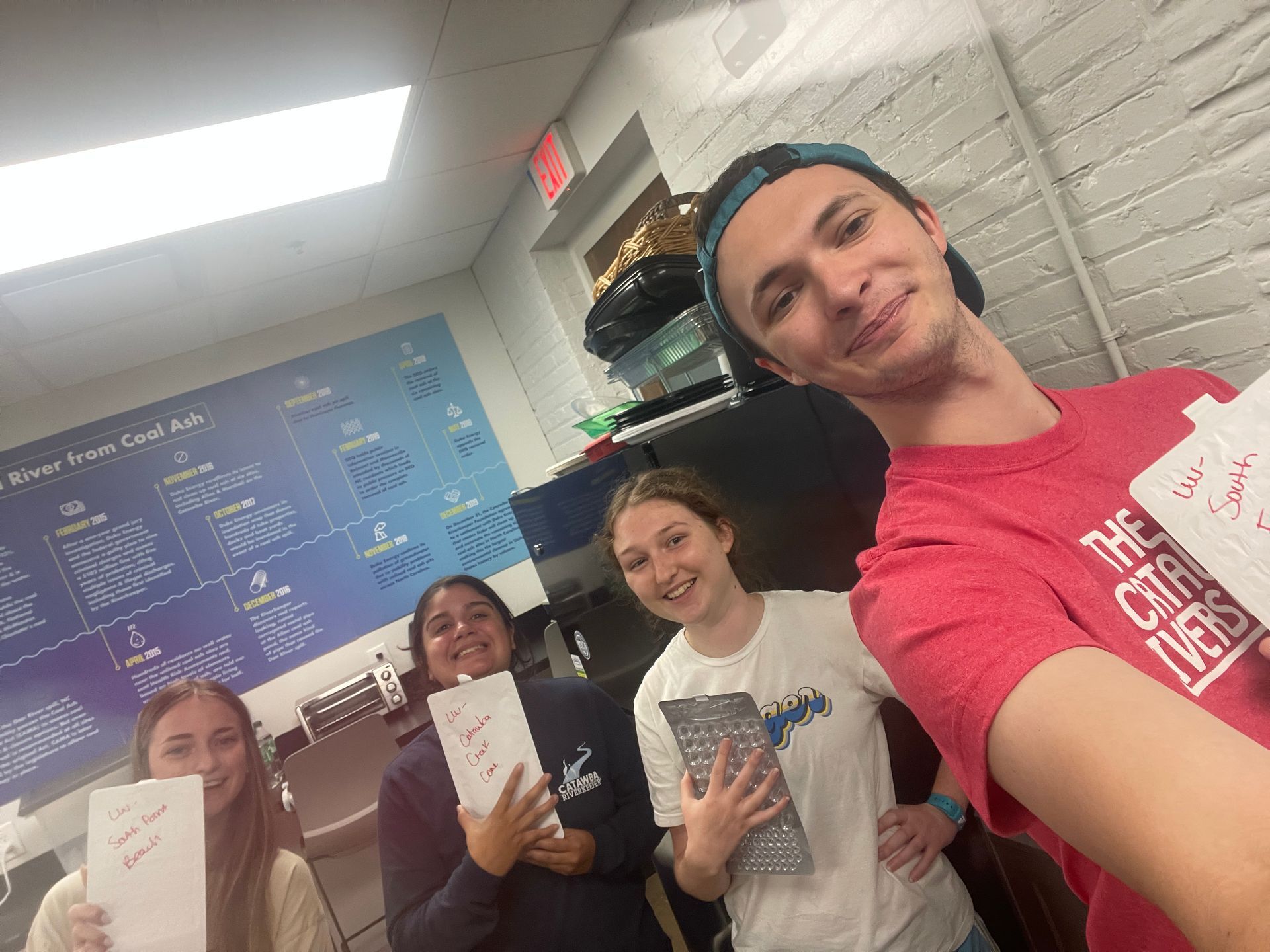
During her internship, Greta gained experience in all aspects of the Swim Guide program, from collecting water samples in the Southern watershed, transporting water samples to the Riverkeeper Lab, and testing the samples for E. Coli. When she wasn’t working on Swim Guide, Greta conducted research on culturing algae samples and using microscopy to identify algae blooms. You can view the slides for her final presentation here. Greta also spent some of her summer researching diversity, equity, and inclusion in the conservation sphere and researching the Carolina creekshell mussel.
Katie Brockland | Northern Watershed Intern | University of North Carolina Chapel Hill
Based in our Morganton office, Katie also worked hard all summer to ensure that Swim Guide samples were collected, transported, and tested in the Northern Watershed. Katie's keen interest in exploring the intricate relationships between environmental dynamics, local communities, and human behavior led her to this internship, and she was glad for the opportunity to gain hands-on experience in water-quality monitoring along the waters of Burke County, NC. Her final project shared her research on 6PPD-quinone, a chemical used to strengthen tires that, according to emerging research, is negatively impacting steelhead, rainbow, and brook trout populations.
Mercedes Carrillo | Marketing Intern | University of North Carolina at Charlotte
Marketing Intern Mercedes also contributed greatly to the success of our Swim Guide Program. Every Friday, she took the data collected for Swim Guide and made it easily accessible for the public in the form of social media posts. During her internship, she focused on a variety of design, content creation, and event planning tasks, including creating flyers, social media posts, and promotional materials for various events like Jam at the Dam, Pig Pickin’ and Politicin,’ and RiverFest. Mercedes shared that ”the opportunity to work on a variety of projects has helped me develop a versatile skill set, and the experience of working within a non-profit organization has given me a deeper understanding of how design and communication can support important conservation causes.”
Parker Kabel | Outdoor Recreation Intern | University of Kentucky
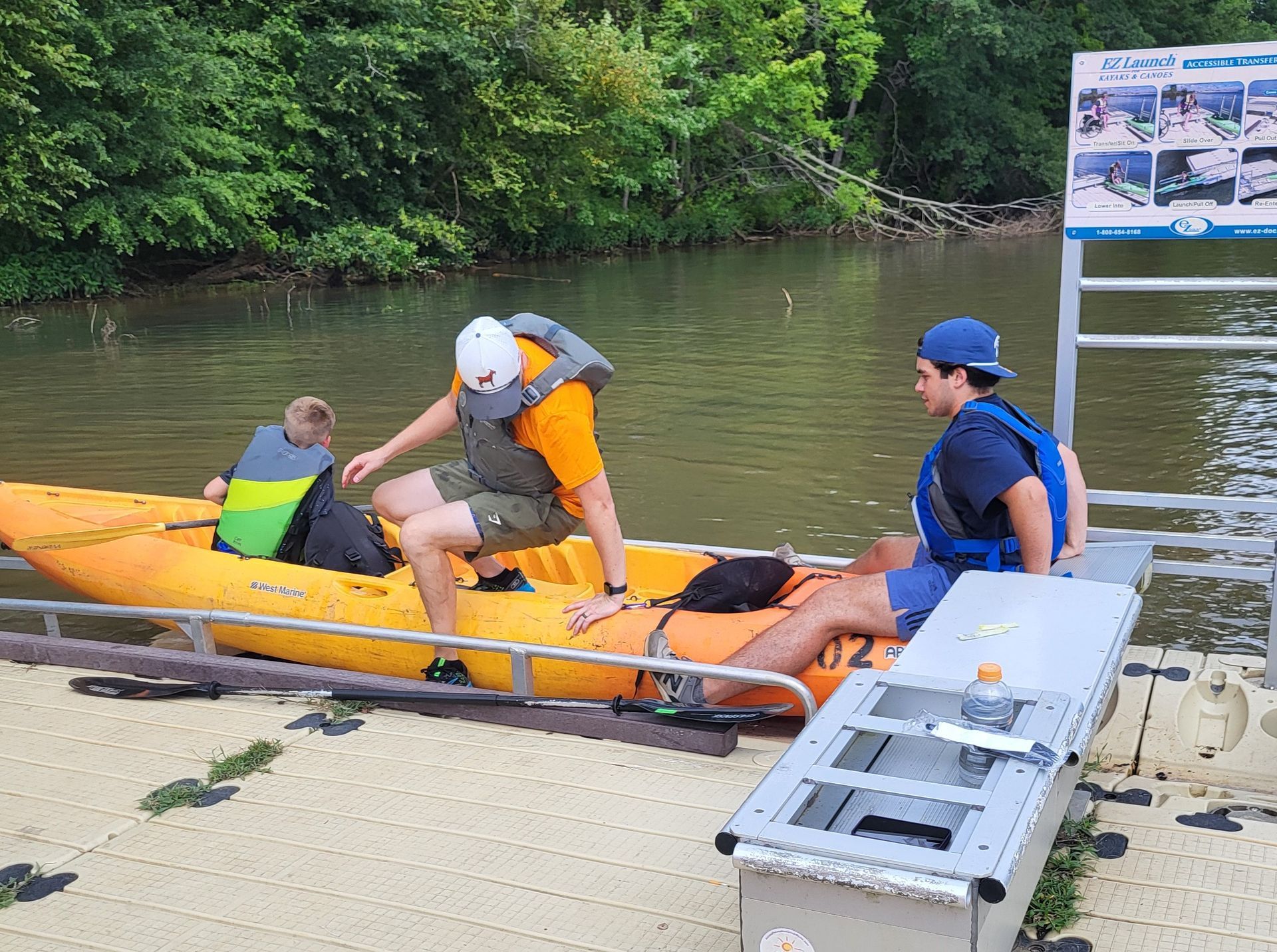
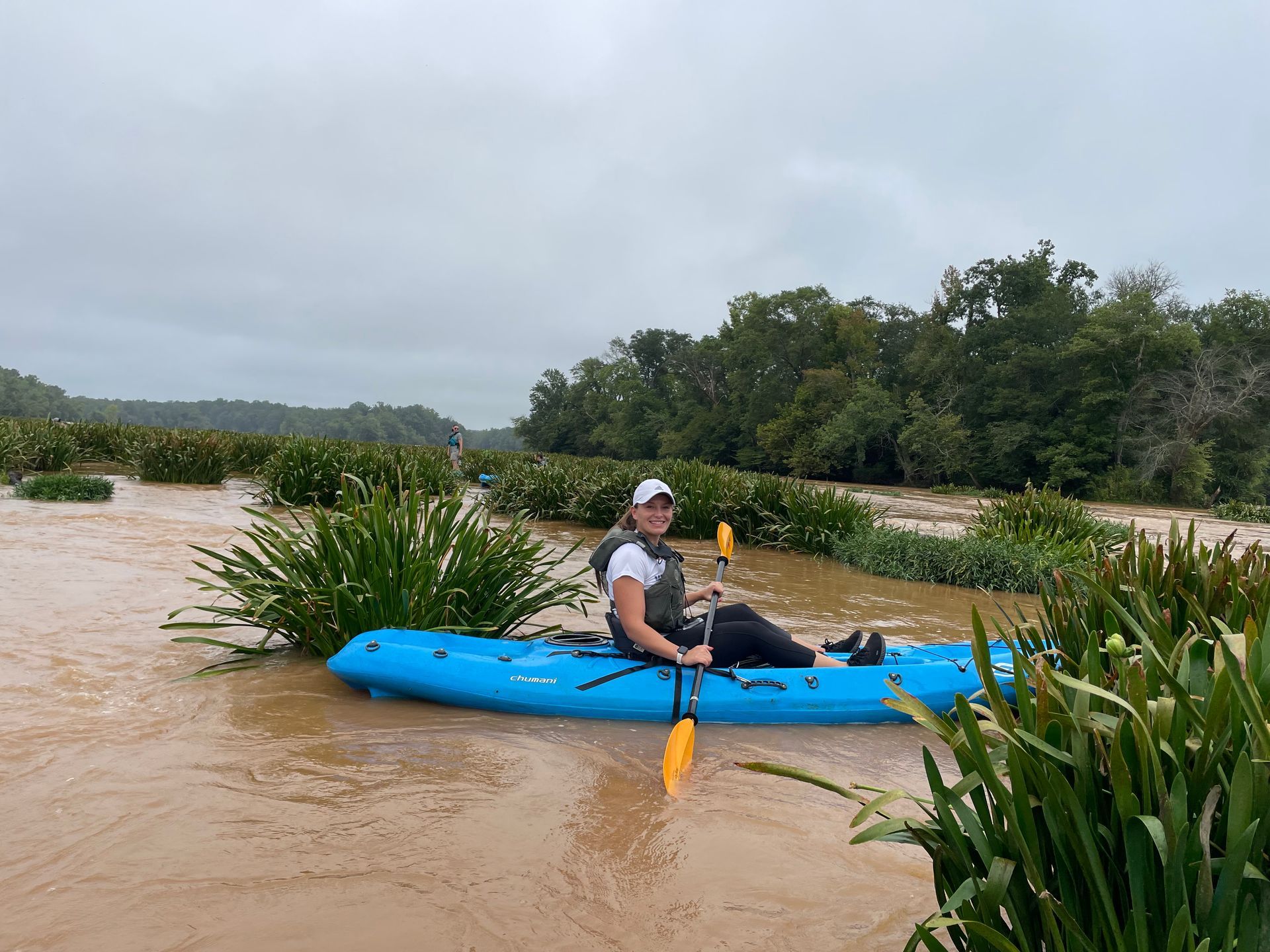
Though perhaps a bit obvious to say, Parker, our Outdoor Recreation Intern, spent much of his time outside and on the water this summer. Supporting Eco-Tours, Full Moon Paddles, private paddles, and CREEK Program paddles gave Parker the opportunity to work with a wide range of people with a variety of backgrounds and paddling skills. When he wasn’t slinging kayaks or paddling with groups, Parker contributed greatly to the planning and preparation of numerous summer events, such as Jam at the Dam and RiverFest.
Nathan Young | Community Outreach Intern | University of North Carolina at Charlotte
Participating in the Catawba Riversweep last fall led Nathan to apply for the Community Outreach Intern position in the spring. In this role, Nathan met people from all over the river basin as he supported numerous public and private volunteer cleanups. While he was working with us this summer, Nathan also collected and organized data from our Trash Traps, and he completed the North Carolina fishing line recycling project. With his help, 8 new bins have been installed around the Central Basin! Nathan also spent time researching volunteer retention, primarily in an environmental conservation setting.